Category: Articles

  • The World Cup Team That Hasn’t Played a Home Game for Five Years

    The World Cup Team That Hasn’t Played a Home Game for Five Years

    StFelix GettyImages 2279525101 1
    Haiti fans celebrate a goal during their 4-0 win against New Zealand on 2nd June 2026. Credit: Megan Briggs/Getty

    This past week marked the beginning of the World Cup, the largest and most watched sports tournament on the planet. Over one billion people worldwide watched the opening match between Mexico and South Africa, while the 2022 final had over 1.5 billion viewers in an all-time classic between holders France and Argentina, with Lionel Messi finally adding the World Cup trophy to his storied career. It’s a tournament that, despite Trump’s best efforts, brings the world and its countless cultures to the host nations in a festival of life, food, music and football. The teams all faced a long and gruelling qualificaiton process to get to North America, with Iraq playing 21 qualifying matches over a 28-month period to book their spot. One team that qualified for this year’s tournament, though, faced a journey like no other.

    Just after midnight on 7th July 2021, masked gunmen stormed the home of Haitian president Jovenel Moïse, assassinating him and injuring his wife Martine. The killing of the president came against the backdrop of economic and social unrest, rampant corruption and widespread gang warfare across the country, with over 90% of the capital, Port-Au-Prince, under the control of rival gangs as of 2023. The presidency has not been filled since Moïse’s assassination, and whilst a rolling door of acting prime ministers have served, the government has effectively collapsed to warring gangs. Gang presence has been widespread in Haiti since the 1950s, when paramilitary groups were established under former dictator Francois Duvalier to attack political opponents. While the groups were officially disbanded in 1986 following the removal of Duvalier’s son, Jean-Claude, the groups merely reorganised as vigilante groups vying for control and power. Years of unrest have resulted in a complete breakdown of government control and public services, with hospitals closed and attacked by the gangs. A  humanitarian crisis has inevitably unfolded as a result of the violence and chaos, with the UN reporting that over 50% of the population require humanitarian assistance, with over 1.5 million – 12% of the population – internally displaced, with widespread reports of sexual violence, including a 163% surge in 2025.

    It’s for this myriad of reasons, then, that Haiti’s relative footballing success during this period is so surprising. Often the highest rated Caribbean team in the FIFA world rankings, they are currently ranked 84th – two places behind fellow Caribbean team Curacao – and are the only Caribbean team to win a major tournament. Reaching three consecutive CONCACAF Gold Cup finals in the 1970s, they won the 1973 edition on home soil, and reached the semi-finals back in 2019, a year after the current turmoil in the country began. A large reason for this success is the impact of Haitian diaspora. Of the 26-man squad for the tournament, only ten were born in Haiti, with 12 of the players born in France with Haitian parents, a legacy of Haiti’s past as a French colony, and the consequence of heavy Haitian migration as a result of conditions at home. Incredibly, Haiti’s manager, Frenchman Sebastien Migné, has never even been to the country having taken over in 2024. They faced a tough qualification process – having to play all their ‘home’ games in neutral countries due to the lack of control of the capital, while the national stadium, the Stade Slyvio Cator, was heavily damaged in the 2010 earthquake and consequent unrest and is currently in the hands of local gangs. They haven’t played in Haiti since a 2021 defeat to Canada.

    Their road to the tournament began in June 2024, kicking off with a 4-1 over Saint Lucia at ‘home’ in Curacao, 800km from home. Further wins against Barbados and Aruba sealed their progress from CONCACAF Second Round Group C, before losing the final group game to Curacao in Aruba, their other ‘home’ game of the group. With eleven goals, and eight different scorers across their four group games, they showed their offensive capabilities, albeit against fairly weak opposition; Curacao were the only other team to progress from the group, and also made it to the World Cup. They then advanced to the Third Round, where they topped a group including Honduras, Costa Rica (who have played in six World Cups, including the five of the previous six, reaching the quarter-finals in 2014) and Nicaragua. Again playing their home games in Curacao, they won three of the six games, suffering only one defeat, a 3-0 loss to Honduras leaving them three points behind their opponents with two games to go. Needing to win their final two games, and for Honduras to drop points along the way, qualification was out of their hands. Although Costa Rica were the firm favourites for the match, Haiti held firm defensively and claimed a historic 1-0 victory. This, paired with Honduras’s 2-0 defeat to Nicaragua, put the two teams level on points going into the final game.

    That final qualification game, at ‘home’ to Nicaragua on 18th November 2025, came on the 222nd anniversary of the Battle of Vertières, the fight which saw French troops leave the then-colony of Saint-Domingue for the last time. Led by enslaved African labourers, who made up approximately 90% of the colony’s population, Haiti became the first black republic in the world, and the Haitian Revolution was the only slave revolt to lead to independence. Playing once again in Curacao, in front of 1500 supporters, Haiti took an early lead, with Don Louicius of FC Dallas giving them the lead, before Ruben Providence heading in from a corner in first-half stoppage time to give the hosts a 2-0 half-time lead. Their second-half showing saw them sitting deeper, surrendering more possession to their opponents, and standing firm defensively to see out the game with a clean sheet. At the same time, Honduras played out a 0-0 draw in Costa Rica. Haiti were back at the World Cup after 52 years. The fighting in the streets of Port-au-Prince was temporarily halted, as people, and rival gangs, came together to celebrate Haiti’s remarkable achievement.

    B7b21d7b 76cf 4470 8b7b 8b74e9813db0 2048x1365
    Haiti fans in Port-au-Prince celebrate Haiti’s qualification to the World Cup after their victory over Nicaragua, 18th November 2025. Credit: Odelyn Joseph/Associated Press

    After the game, Migné told French publication RFI, “everyone was out on the streets. My players will be wonderful ambassadors for a country that sorely needs them. Haiti is not an easy place, with a people who are suffering and don’t have many opportunities to celebrate.” Migné’s impact on the success of the squad cannot be understated. He played a key role in bringing through a new generation of Haitian players, leaning on the diaspora for players, as previously mentioned, with 11 of the World Cup squad making their international debuts under him, all but one of them born overseas. The diaspora’s impact won’t just be felt on the pitch, but also in the stands: Boston, with a 70,000 strong diaspora, hosted their first match, a 1-0 defeat to Scotland; Philadelphia, with a 30,000 strong diaspora, hosts their second match against five-time world champions Brazil; whilst there are 15,000 Haitian-born residents in Atlanta, where Haiti conclude the group against 2022 semi-finalists Morocco. The fans back in Haiti, however, won’t be able to travel to the U.S. to support the team in person. Donald Trump’s government introduced a travel ban in 2025 that has prevented all Haitian citizens from obtaining a visa to enter the United States. The only Haitian given a visa was Woodensky Pierre, the only member of the team who was both born in and resides in Haiti. It’s not the only problem the team has faced; just two days before the start of the tournament, Haiti were told they would have to change the design of their kit, which included a reference to their independence, as FIFA does not allow “political, religious, or personal messages or slogans”.

    The story of Haiti’s remarkable World Cup qualification highlights the history of the nation, it’s journey from colony to republic, through dictatorship, natural disasters and turmoil and revolt against the government. Through all of it, football has become the nation’s escape from the problems of day-to-day life in the nation, with communities pooling together to rent generators to watch the games. In a world where so much media attention is on immigration, refugees and asylum seekers, Haiti’s inspiring qualification story highlights the strength of a nation’s people through turbulent times. A country, and a people, decimated and destroyed by violence will, for a few weeks at least, be united by their national team’s journey to the United States for their three group games.

  • The Small Thai Town With a Dark Wartime History

    The Small Thai Town With a Dark Wartime History

    Just a few hours from Bangkok, this infamous Thai bridge is home to one of the most brutal wartime projects ever carried out and cost 16,000 lives.

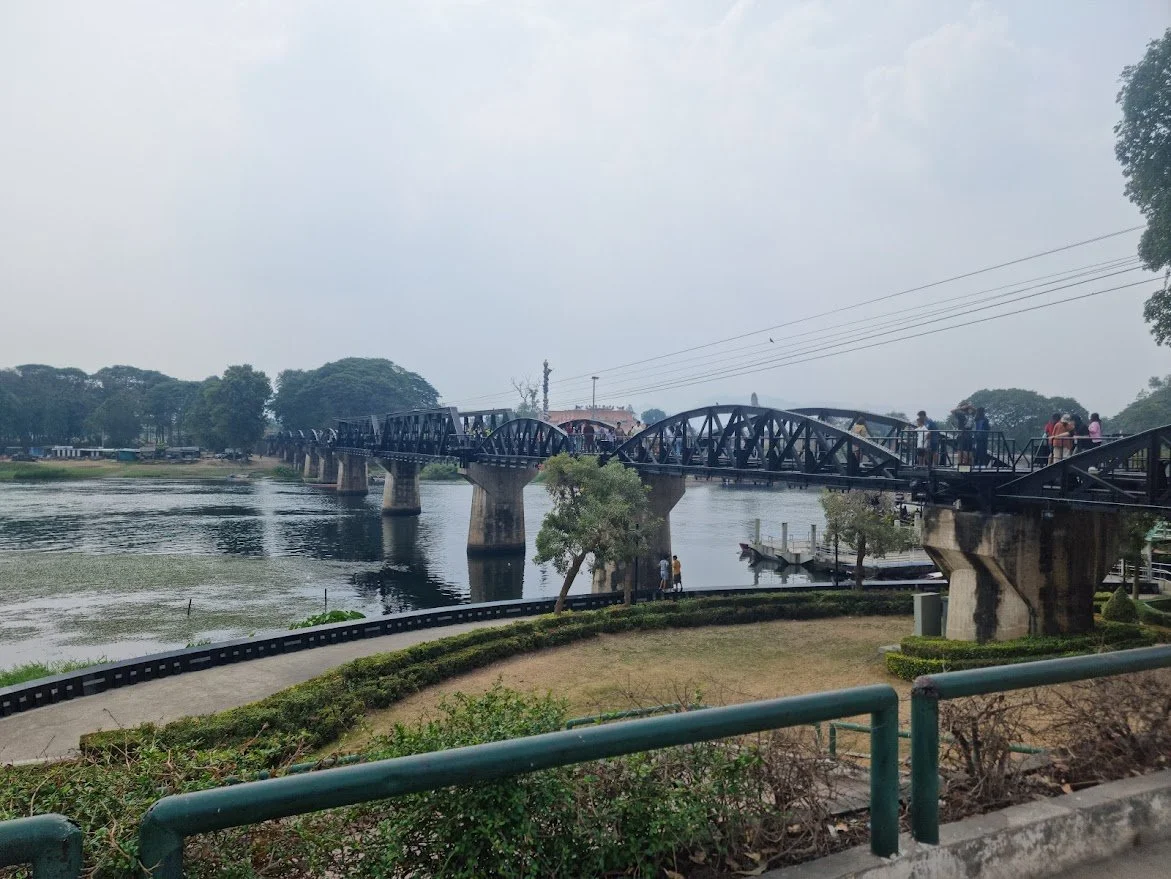
    Bridge over the River Kwai.
    Bridge over the River Kwai.

    Stepping out of the entrance of my hostel just before 7 a.m., the immense, never-ending bustle of Bangkok wakes me more than any 7-Eleven iced coffee ever could. When I get into a Grab car (I haven’t yet mustered the courage to get on the back of a motorbike), I am driven through the backstreets and main roads, past the hundreds of motorbikes, produce markets and temples. Even four days into my stay, I am still awestruck at the scale and magnitude of Thailand’s capital city. My destination, though, is past the city lines: Kanchanaburi, a small town almost 80 miles west of the capital and immortalised through one of the most famous war films of all time, “The Bridge on the River Kwai” (1957).

    As a confessed history buff, I am a little ashamed to admit that, although I had heard of the Bridge over the River Kwai and was acutely aware of the history surrounding its construction, I didn’t actually know where it was. So when, just a week before I arrived in Bangkok, I discovered that Kanchanaburi was only a two-and-a-half-hour train from Thailand’s capital, it was very quickly added to my itinerary. What follows is a memorable day, and though it is difficult to take in the horrors of what occurred there, it is necessary to fully understand and appreciate the true nature of the lives of prisoners of war in the Pacific Theater at the hands of the Imperial Japanese Forces.

    The Bridge over the River Kwai was part of the infamous Thai-Burma Railway, often referred to as the Death Railway due to the vast numbers of casualties accumulated over its construction. Built by British, Australian and Dutch prisoners of war (POWs), as well as indentured Asian laborers shipped over to Thailand by Japanese forces, the network spanned from Ban Pong in central Thailand up to Thanbyuzayat, Myanmar, and was 218 miles long. It claimed the lives of over 100,000 people, including around 16,000 POWs and over 90,000 indentured laborers. Built between 1940 and 1943, the railway was envisioned to supply troops and weapons in the Burma campaign, part of Japan’s attempts to gain total control over Southeast Asia. The POWs were forced to live in brutal conditions, made to walk for hours each day while carrying heavy materials, with little to no food or sanitation, causing many to die from malnutrition, dehydration, cholera or malaria.

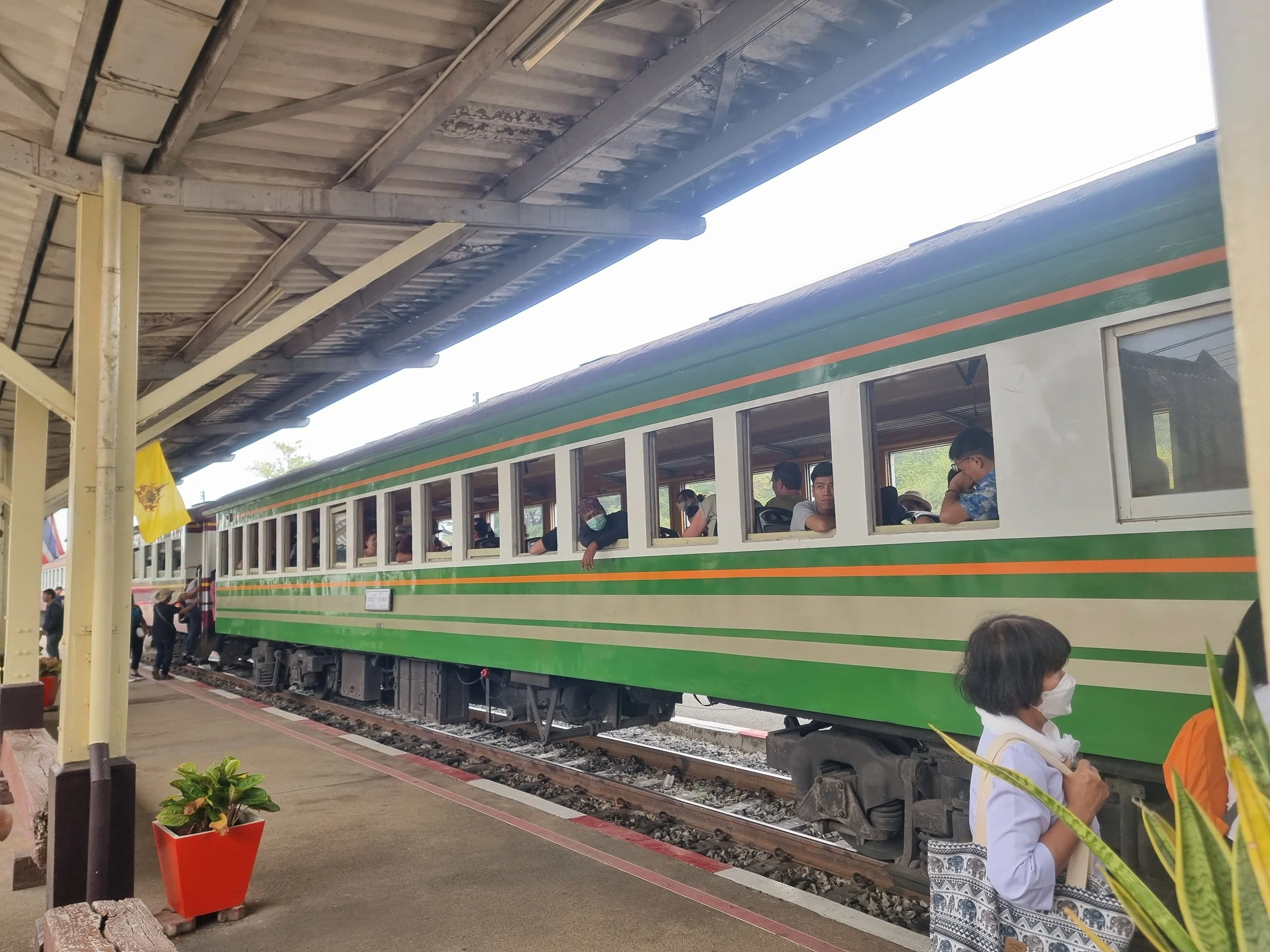
    As I arrive at Thonburi station, I approach the ticket office and book the 257 train to Kanchanaburi. The ticket costs 100 baht (around 3 dollars) for foreign nationals and is free for Thai citizens. Boarding the old wooden train, you really are transported through time as you take your seat on a plastic bench, with no air conditioning to cool you down, just the breeze from the open windows and the small fans hanging in the corners of the carriages. Luckily for me, the early morning start means the temperature is not too intense. The journey takes approximately two and a half hours, traveling through rolling green hills, past rivers and small villages, a snapshot into life outside Thailand’s sprawling metropolis. You will be greeted by the sight of old women washing clothes in the streams and animals running on dirt roads, with the small pockets of ordinary life gradually giving way to the spectacular scenic views. It provides a great sense of calm and serenity, much needed before the emotional and sobering day ahead.

    Train arriving at Thonburi Station.
    Train arriving at Thonburi Station.

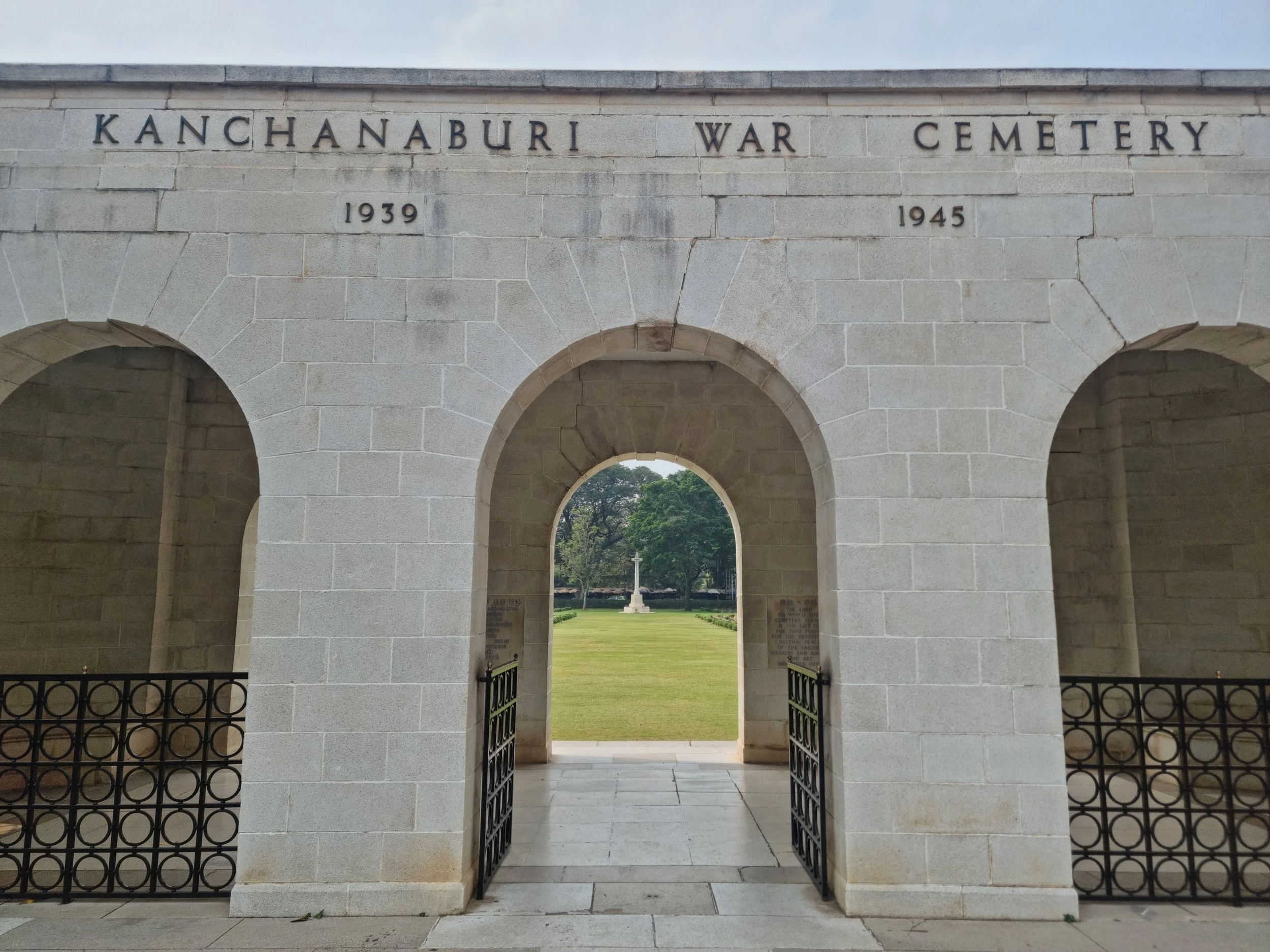
    On arrival at Kanchanaburi railway station, it is just a two-minute walk to the first site of the day: the town’s war cemetery. Located in the middle of town, the cemetery, which is under the care of the Commonwealth War Graves Commission, is situated between a local school, a police station, a fresh produce market and several cafes and nail salons. I think it is for this reason that the scale of the fatalities hits even harder as you step through the entrance gates into the cemetery.

    The entrance to Kanchanaburi War Cemetery.
    The entrance to Kanchanaburi War Cemetery.

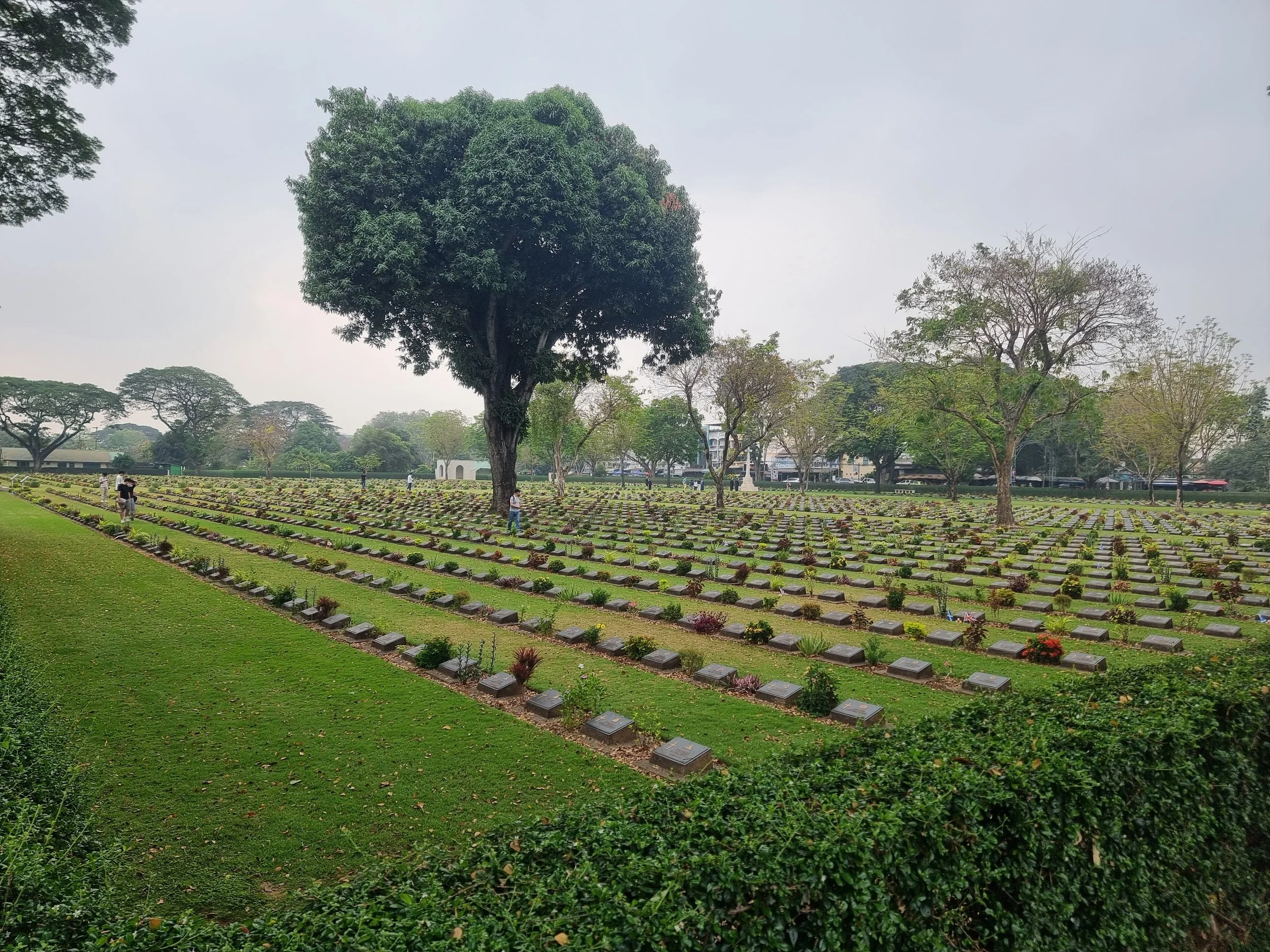
    Amid the noise of beeping horns, yelling in the market and background chatter from the cafes, you are immediately met with the sight of 6,858 graves arranged in row after row. The noise of your surroundings quickly fades as you are faced with the magnitude of death that this small town played host to. Buried in the cemetery are 3,585 British, 1,896 Dutch, 1,362 Australian, 12 Indian, two New Zealand and one Canadian soldiers, many who were still in their teens or early twenties. Walking through the grounds, taking a look at the names and ages, it’s difficult to imagine what they went through and the horrors they faced at the hands of the Japanese forces.

    Graves at Kanchanaburi War Cemetery.
    Graves at Kanchanaburi War Cemetery.

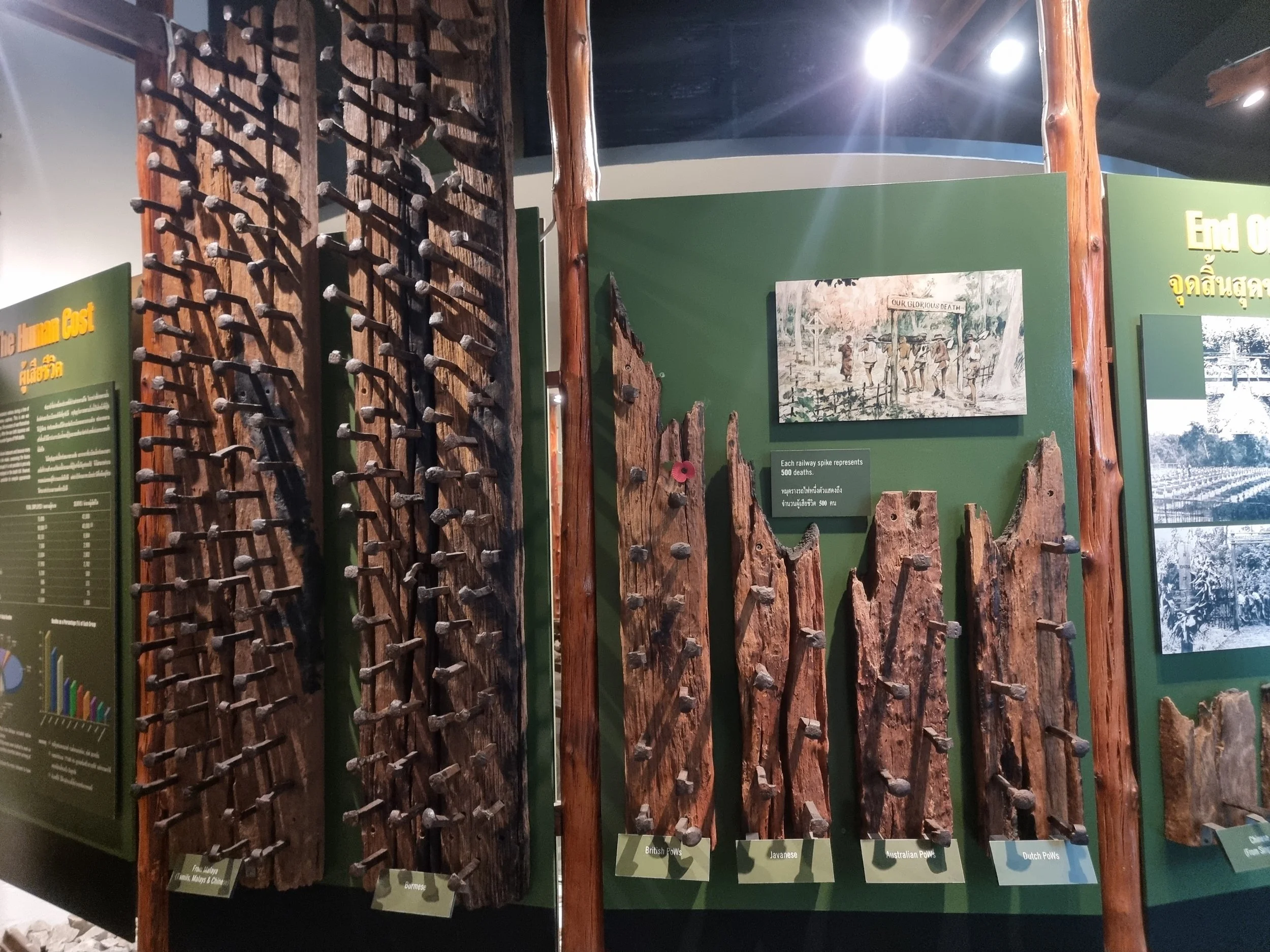
    Just across the road from the cemetery is the Thai-Burma Railway Center, the main museum dedicated to the railway and the lives lost in its construction. Entry is 160 baht (5 dollars) for adults and 80 baht (3 dollars) for children aged 7 to 12, which also gets you a voucher for a free hot drink from the cafe upstairs. The center is open every day from 9 a.m. to 4 p.m., and it is a must if you want to gain a deeper understanding of the conditions in which the POWs and laborers lived. Set up by Rod Beattie, an Australian civil engineer, the center contains eight sections showcasing the history of the railway. On entry, you are greeted with the display of a large timeline: the railway’s inception in 1942, the completion of the line in 1943, the surrender of Japanese forces in August 1945, the post-war decision to sell the Thai section of the line to the Thai government and finally its closure in 1947. There are reconstructions of both the transportation used to ship the prisoners and laborers to the railway site, not much more than a wooden railway wagon, and a hospital hut, showcasing the ingenuity of the prisoners to craft medical equipment out of what little they had to take care of each other as much as they could. There are examples of the machinery and tools used to build the railway, as well as a section dedicated to the liberation of the prisoners, their repatriation, the search for bodies and the establishment of the war cemeteries along the railway line. There are also displays of recovered items from the railway, including spikes and other material used in the construction, as well as personal items recovered from the prisoner camps, like name tags, combs, cutlery and bottles. Perhaps the hardest-hitting feature in the center is the summary of deaths, a graphic display of the human cost of the railway, with each spike representing 500 dead.

    Spikes depicting the human cost of the railway.
    Spikes depicting the human cost of the railway.

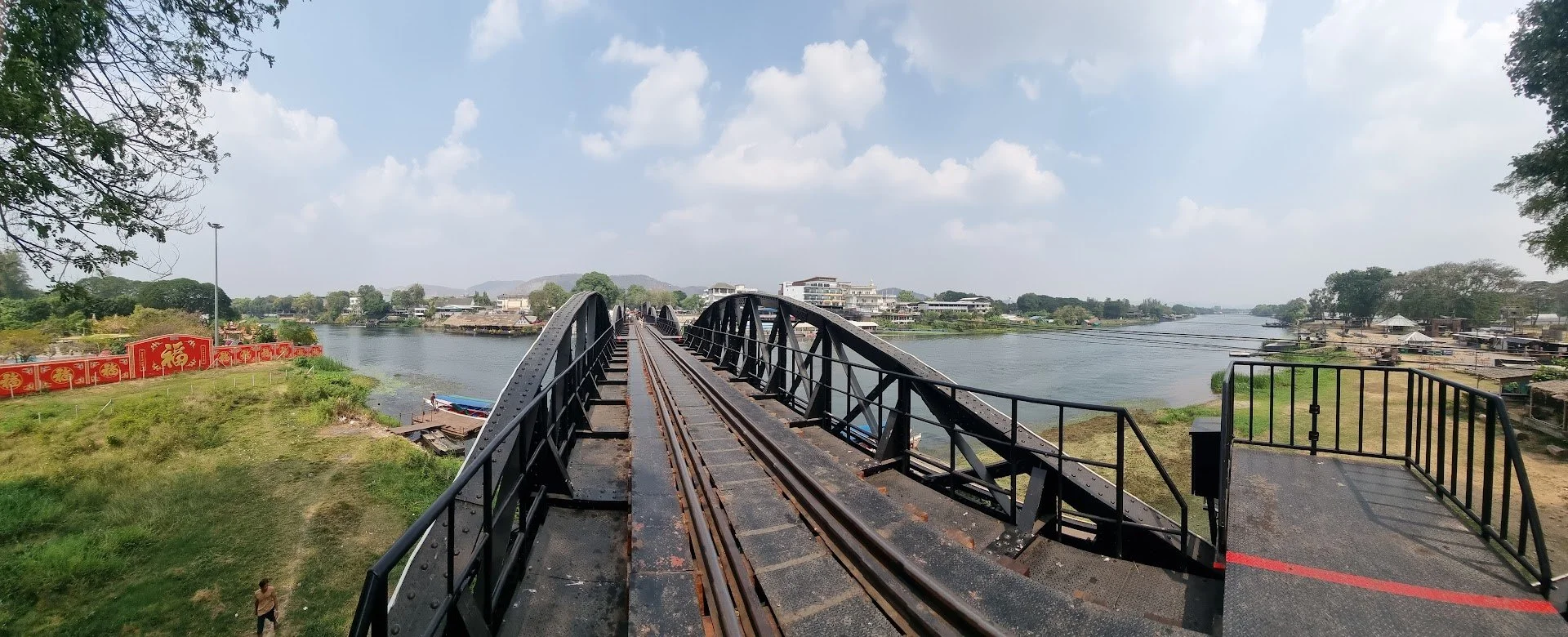
    My next stop is the bridge itself. Known on the railway line as Bridge 277, it was made infamous for its depiction in the classic 1957 film starring Alec Guinness, William Holden and Jack Hawkins. The film follows a cohort of British POWs as they are transported to a Japanese prison camp, where they are forced to work on the railway and build the bridge over the river. Although the film was shot in Sri Lanka, the fictional bridge is based on Bridge 277. The site initially consisted of two bridges: a wooden railroad bridge, finished in February 1943, and the metal and concrete bridge that still stands today. The curved trusses, still in use, were brought over from Java by Japanese forces. The bridge itself is just under two miles from the railway center, so it is advisable to order a Grab or taxi, especially if you are there in the sweltering summer months.

    On my visit, I choose to walk. Arriving at the site of the bridge, I am met with plenty of riverfront restaurants, markets and, of course, a few 7-Elevens. Being back in the busy Thai street life makes the presence of the bridge feel even more ominous, another sign, like the cemetery, that life has continued through the horrors of war. The bridge, as expected, is incredibly crowded, with tourists stopping for pictures along the walk. Trains do still operate here, about three to four per day, along the line up to Nam Tok, which is the last remaining station on the original line. You can go as far as through the Hellfire Pass, an area of harsh jungle land that was cleared using dynamite to make space for the railway. Sadly, I do not have enough time to incorporate this on my own journey, as there is only one train leaving Kanchanaburi to Bangkok each afternoon, although you can easily book a group tour to do the full route from the capital. There are even special train lines that run the full route on weekends and public holidays. Walking along the bridge to the other side of the river takes only about five minutes, but it is a very sobering and contemplative walk. Looking down onto the concrete structure that has stood since 1943, you are reminded of the human toil that this bridge was responsible for: the countless deaths, the brutal conditions. There are plenty of moments over the course of the day when you will ask yourself whether it was really worth it for some train tracks.

    The bridge from the other side of the water.
    The bridge from the other side of the water.

    Overall, the trip to Kanchanaburi is a must if you are in Bangkok. Whether you are a history buff, interested in the Second World War or simply getting to know the local area, the trip will leave you feeling a sense of despair at the horrors that man can commit, along with a new appreciation for the sacrifices made by all those who lost their lives in conflict.

    If you would like to learn more about the Thai-Burma Railway Center and its work, click here.

    Note: This article was first published in Catalyst Planet

  • The Victims of Agent Orange Making a Living Crafting Art

    The Victims of Agent Orange Making a Living Crafting Art

    On the outskirts of Ho Chi Minh City, victims of American bombing achieve financial independence through their unique artwork.

    Agent+orange+1

    If you ever find yourself in Ho Chi Minh City, it is almost a given that, at some point in your journey, you will travel to the Cu Chi Tunnels. Located just under 30 miles north of the country’s largest city, this famous spot along the Vietnam War-era network of underground tunnels has become a must-see attraction. There are a myriad of tour operators running daily trips to the tunnels, no doubt with some stops along the way. On my tour, our first visit was Lang Viet Lacquers, a small art factory on the outskirts of the city with a unique story.

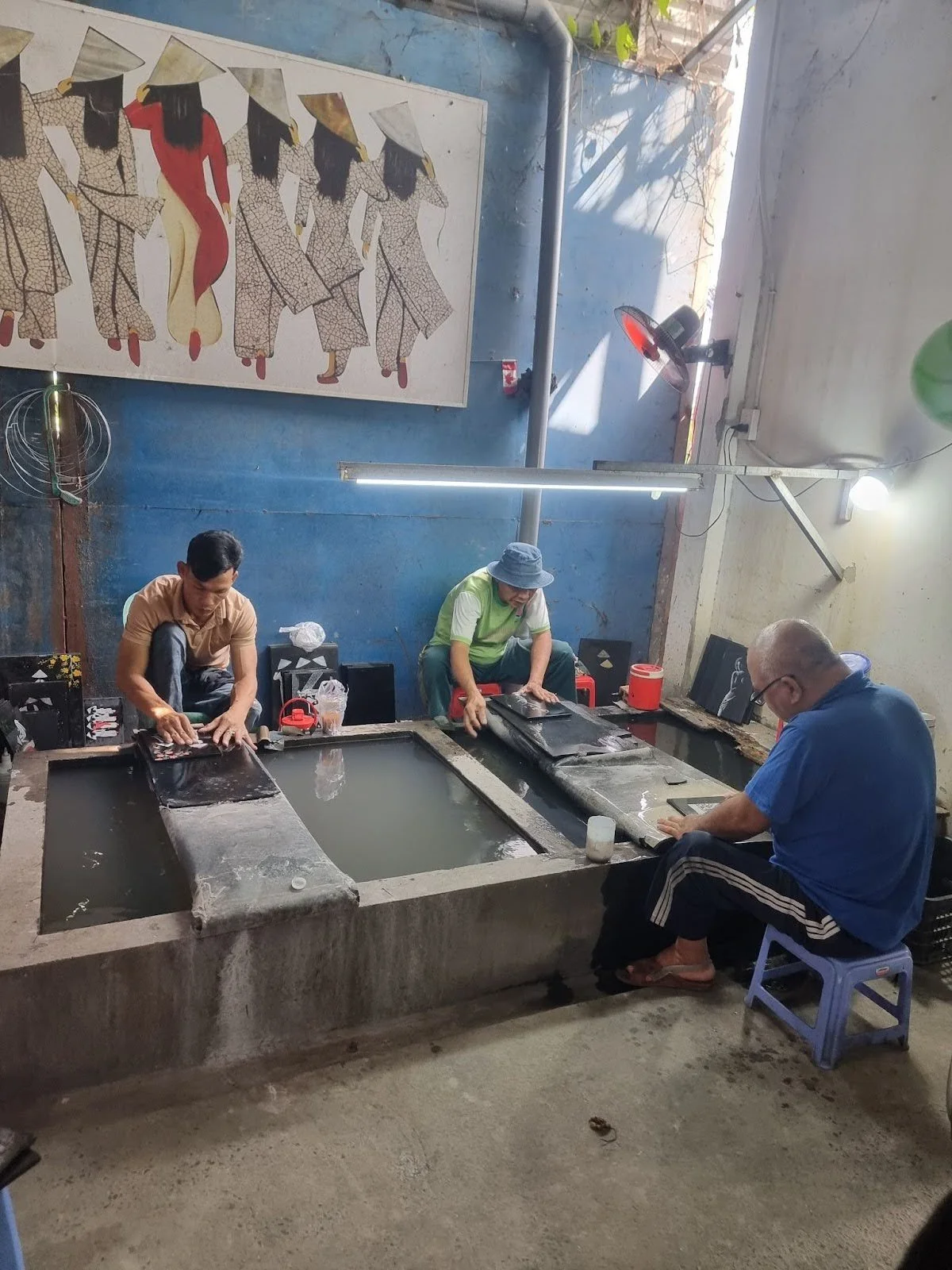
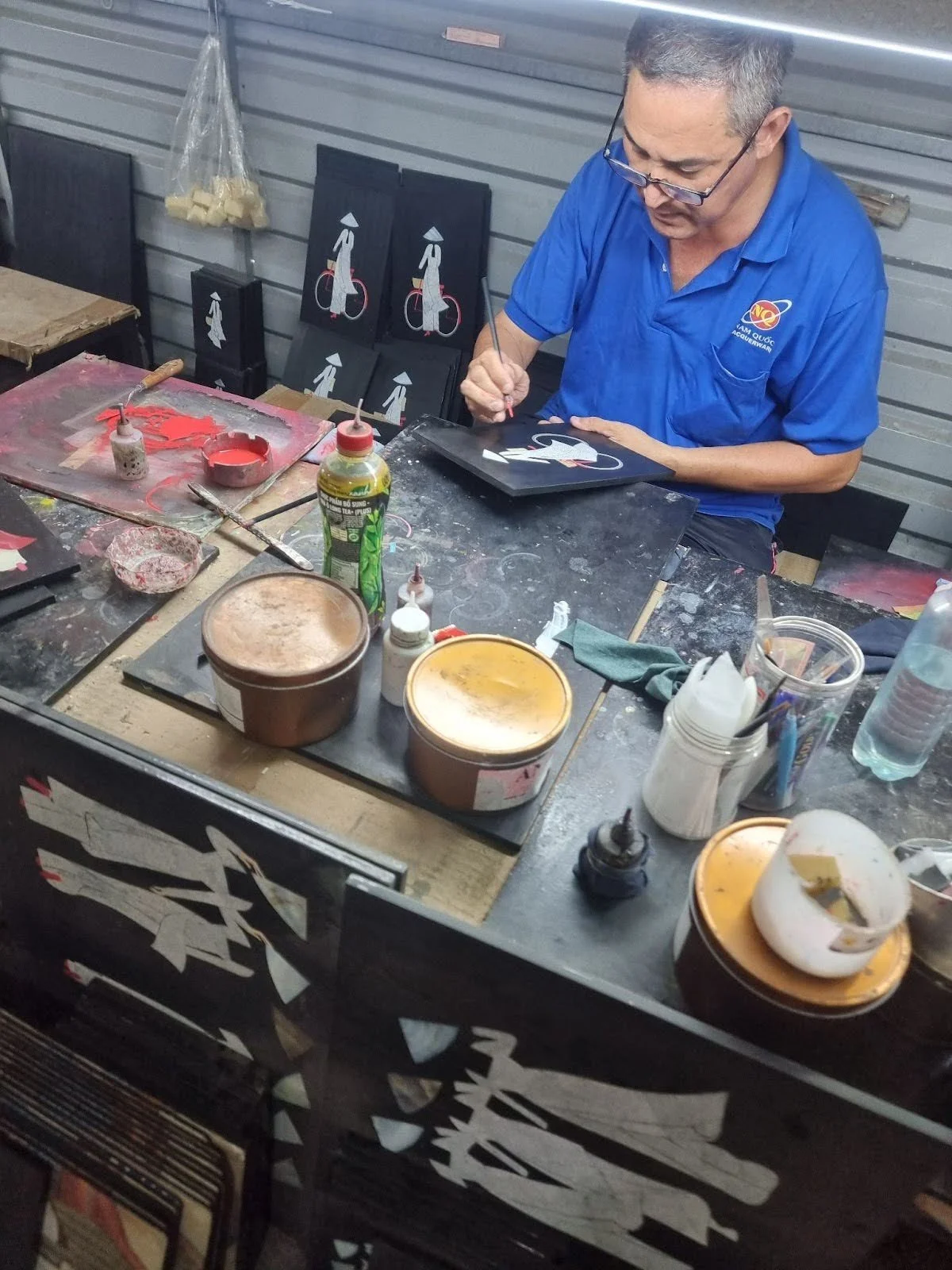
    Lang Viet Lacquers, situated in the city’s northwest, is a government-supported enterprise allowing victims of America’s brutal Agent Orange bombing campaign to achieve financial independence through lacquer painting, an art form that has existed in Vietnam and Southeast Asia for over 2,000 years. The stunning artwork consists of rich, almost reflective colors, with the addition of eggshell and mother-of-pearl to create bright, contrasting sparkles against the background.

    Agent+orange+2
    Agent+orange+3
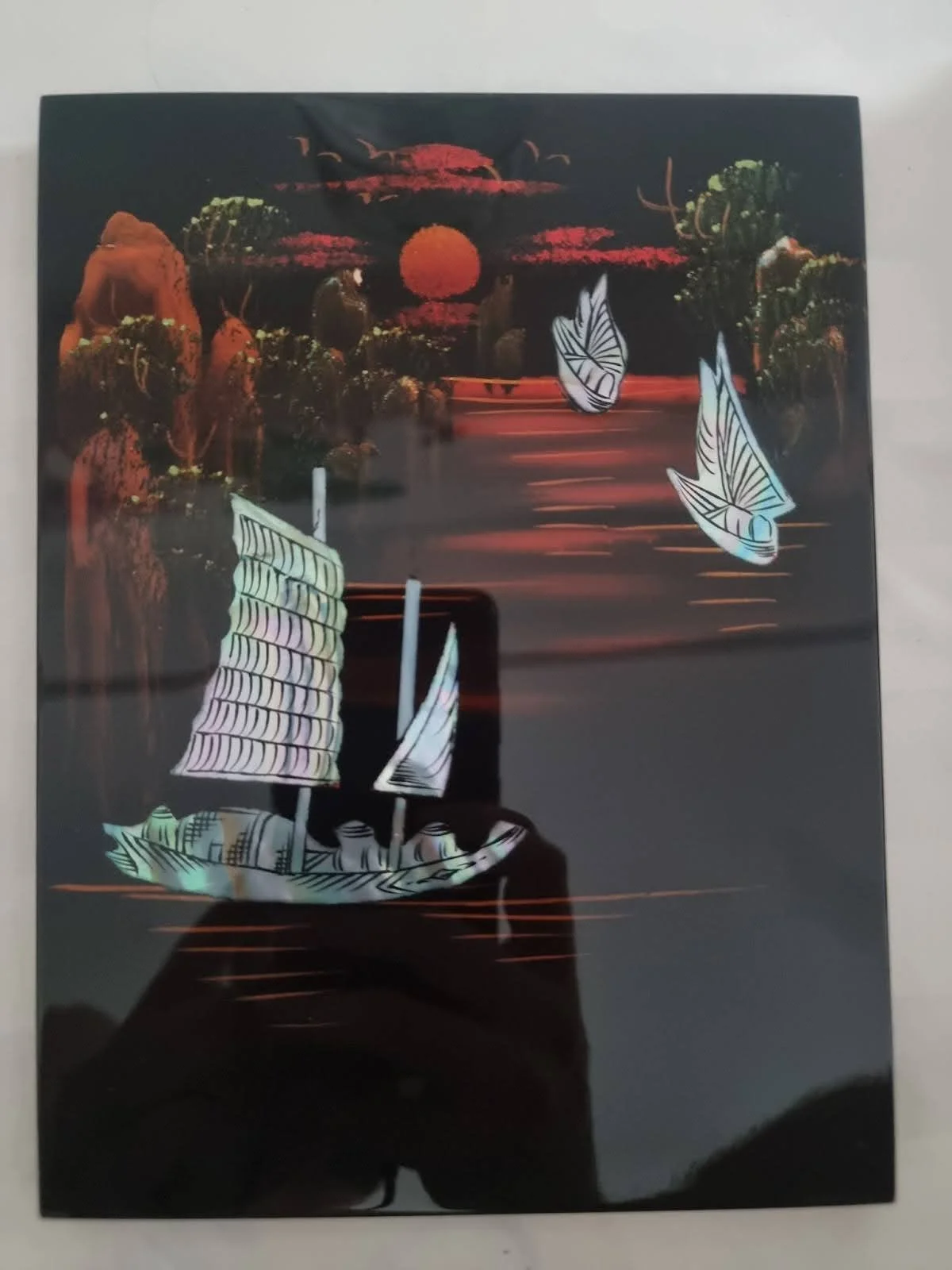
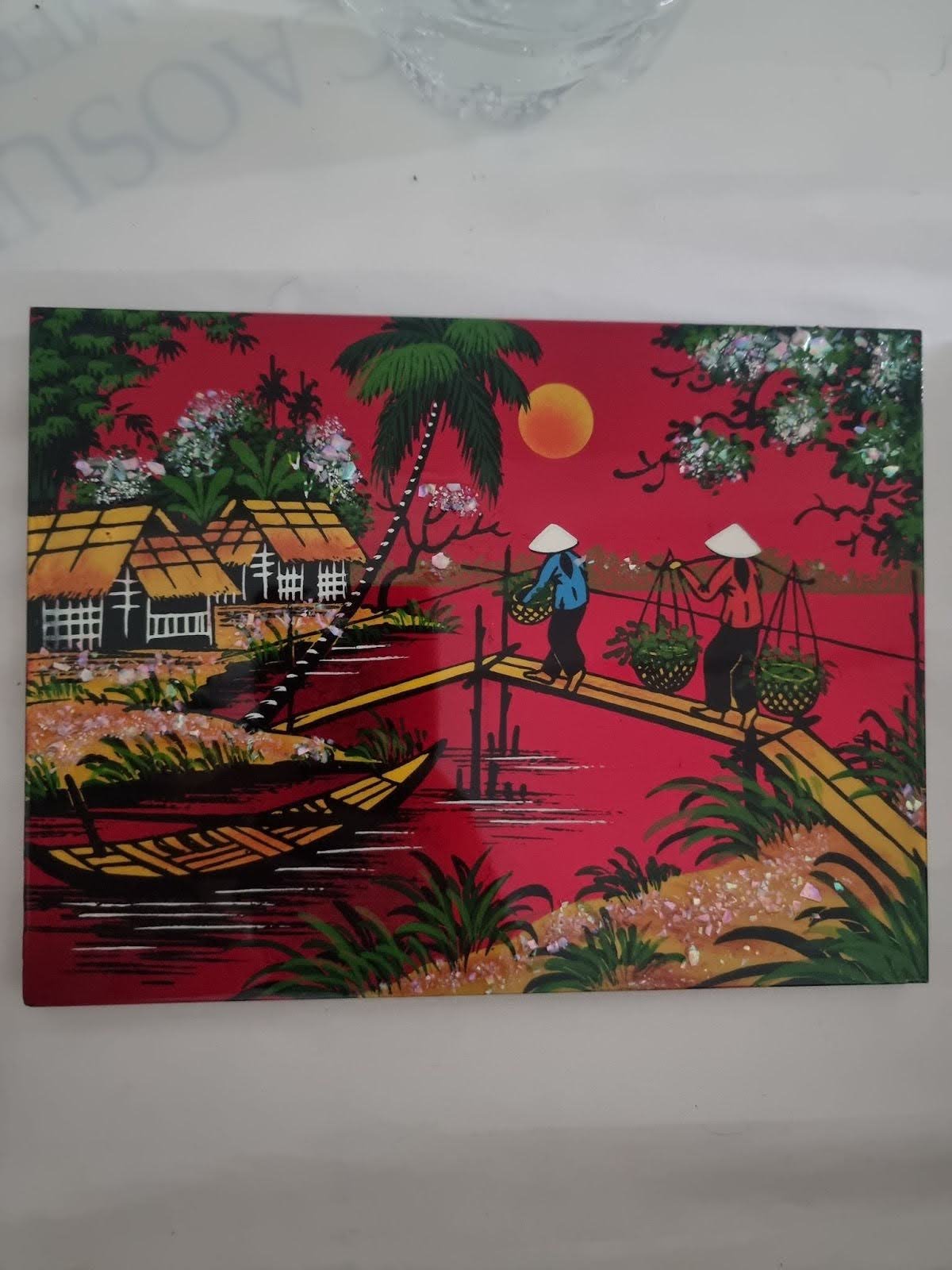
    My two purchases from Lang Viet Lacquers.

    Arriving in the intense heat of the Vietnamese sun, we stepped off the coach and were ushered into the workshop, where we saw firsthand the artwork being created with painstaking care and detail. We were told how all the artists are victims of Agent Orange, the herbicide sprayed in large quantities over Vietnam by U.S. forces during the Vietnam War. These victims are not just war veterans; the devastating effects of Agent Orange were passed down to descendants of those affected, and the succeeding generations have suffered greatly in turn. For each work of art sold, the proceeds go directly to the artists, helping them achieve financial independence. Many of the injuries and conditions they suffer from mean they cannot work in the traditional sense, predominantly due to mobility or developmental issues, so this outlet allows them to maintain their freedom. In their shop, you are able to purchase a wide variety of items, from small souvenirs to large, wall-hung art, so there is something for everyone’s budget and luggage space.

    Artist adding finishing touches to painting.
    Artist adding finishing touches to painting.

    The actors behind Agent Orange initially claimed their intent to destroy the Vietnamese jungle and root out guerrilla forces deep in the overgrown countryside, but the effects were much more serious and long-lasting. Being sprayed across almost 3 million hectares, over 4 million Vietnamese were exposed to the chemical, and while those directly exposed suffered from health issues, such as multiple neurological disorders, increased cancer rates, heart disease and serious skin rashes and scarring, the effects of Agent Orange were also passed onto their children and grandchildren. Later generations of Vietnamese citizens whose parents and grandparents were victims of Agent Orange have suffered from cleft lip, heart defects, birth disorders leading to lack of limbs, increased cancer rates, congenital heart diseases and severe learning disabilities, to name a few. Studies have shown that Vietnamese exposed to Agent Orange also have a higher rate of dioxins in their bodies, which are highly toxic pollutants that can cause issues like chloracne, cancer, immune and reproductive problems, developmental issues and chronic illnesses.

    One of the reasons for the continued effects of Agent Orange on the younger generations is the fact that these dioxins are still found in Vietnamese soil, water and food chain. It is consumed through contaminated crops and livestock, breathed in via dust and absorbed through the skin, meaning that Agent Orange has continued to plague Vietnamese civilians for decades after the last of the chemical was dropped on the country. Additionally, dioxins have a half-life of 7 to 11 years, meaning that the strength of the chemicals did not decrease until approximately 1980 and is still present today, although in lower quantities and intensity

    Agent Orange also had a strong impact on Vietnamese wildlife: A post-war study found 24 species of birds and 5 species of mammals in an area of forest that had been heavily sprayed, compared to two non-sprayed forest areas that each had over 100 bird species and at least 30 mammal species. Studies have found that the rate of miscarriages and birth defects was significantly higher in women who had been exposed to Agent Orange. Research has also shown that U.S and Australian soldiers who were exposed to Agent Orange have a much higher risk of elevated blood pressure and tumors, among other health issues, while those soldiers exposed to the dioxins had a higher rate of soft-tissue sarcoma, a rare type of cancer found in muscle tissue. A 2021 study also found that American veterans exposed to the herbicide were almost twice as likely to develop dementia.

    The United States began to deploy herbicidal agents in Vietnam in January 1962, with the launch of Operation Ranch Hand, although the first major operations did not begin until September, when mangrove forests on the Mekong River were targeted. The majority of Agent Orange usage was between 1966 and 1969, with an estimated 170 kilograms of dioxin dropped on Vietnam and even more sprayed onto the border areas of Laos and Cambodia. By 1971, the evidence of the harmful effects was beginning to be known, and the U.S. government halted all herbicidal spraying operations in Vietnam, with the remaining stock destroyed by 1977.

    The use of Agent Orange was incredibly controversial at the time. The Federation of American Scientists urged the U.S. government not to use chemical and biological weapons unless used by the enemy first in 1964, concerned that the government was not discriminating between military and civilian targets. In 1966, a group of scientists led by John Edsall of Harvard University appealed to President Lyndon B. Johnson to ban the use of such weapons. The statement reads, “such tactics are barbarous because they are indiscriminate; they represent an attack on the entire population of the region where the crops are destroyed, combatants and non-combatants alike.” Similar protests continued for the remainder of the war.

    If you are able to visit Lang Viet Lacquers, it is well worth the trip. Being able to purchase some great souvenirs, along with helping those who have suffered the consequences of America’s brutal war, is a worthy highlight of a trip to Vietnam. I’m a big believer in leaving somewhere better than I found it, embracing local cultures and giving back to the communities I have discovered through my travels, and this is a great way to do all three.

    GETTING THERE:

    Lang Viet’s is located just nine miles north of the airport. You can book a Grab Bike from the centre of Ho Chi Minh City near Ben Thanh Market, Saigon Central Post Office, Independence Palace or the Cathedral for about four dollars. It is also served by buses 13, 24, 74 and 94, which stop just outside the shop.

    Note: This article was first published on Catalyst Planet

  • How Rats are Combating Cambodia’s Mine Crisis

    How Rats are Combating Cambodia’s Mine Crisis

    On the outskirts of Siem Reap, rats are leading the fight against landmines in one of the world’s most affected countries.

    APOPO+article+image

    “Once you’ve been to Cambodia, you’ll never stop wanting to beat Henry Kissinger to death with your bare hands.”

    One of the late Anthony Bourdain’s most recognizable quotes centres on the role the U.S. played in the devastation of the mine-infested Southeast Asian country during the Vietnam and Cambodian Civil Wars. Cambodia’s natural beauty, plethora of breathtaking temples and numerous UNESCO World Heritage sites are overshadowed by its dark history of authoritarianism and genocide under Pol Pot and the Khmer Rouge. Perhaps there is no greater evidence of the past’s lingering effect on the nation than the estimated 6 million mines still littered across Cambodia, which claimed the lives of 12 people in 2024, along with another 29 casualties and eight amputations. During my visit to the country in March 2025, I was able to seeAPOPO’s visitor centre, learning how one organization is working to clear these mines using a rather unconventional method: rats.

    Cambodia has one of the highest rates of amputation in the world, with over 40,000 amputees since the outbreak of hostilities in the 1960s. Several sides are responsible for planting the explosives that have caused these casualties; the Americans dropped nearly 3 million tons of ordnance between 1965 and 1973, the Khmer Rouge, under Pot, laid an estimated 4 million to 6 million landmines and other munitions, and the government of the People’s Republic of Kampuchea, a satellite state of Vietnam, planted mines along the entirety of the Cambodia-Thailand border after the Rouge’s overthrowal. There are a number of organizations working to remove the remaining unexploded ordnance (UXO) in Cambodia, such as the HALO Trust, Mines Advisory Group and Cambodian Self Help Demining, all doing valuable work. One notable group is APOPO, which stands out for its innovative use of rats as a mine action solution.

    APOPO is a Belgian NGO that trains southern giant pouched rats, dubbed HeroRATs, and survey dogs to detect landmines and tuberculosis. Founded in 1997 by Bart Weetjens, who discovered a publication in which gerbils were used for scent detection, APOPO began training rats in 1998 with funding from the Belgian government before relocating their headquarters to Tanzania in 2000, where they are still based. Having gathered enough evidence that the rats would be effective, they carried out their first trials in 2003, with all twenty landmines successfully found. Achieving operational accreditation in 2004, the group officially launched its HeroRAT campaign the following year before beginning its operations in 2006, tackling mine-clearance procedures in Mozambique. They partnered with the Cambodian Mine Action Centre in 2014, with the first group of HeroRATs arriving in 2015. As of 2026, they operate in Angola, Azerbaijan, Cambodia and Ukraine, and they have cleared over 170,000 mines from over 132 million square meters of land. Their work so far in Cambodia has seen them clear over 8,000 landmines and nearly 43,000 pieces of UXO, such as bombs, shells and other munitions that failed to detonate, returning over 75 million square meters of land to local communities. At APOPO’s visitor centre in Siem Reap, you can learn firsthand about the work they do in helping clear Cambodia of mines and overcome the traumas of the country’s past.

    The visitor centre provides tours every day from 8:30 a.m. to 4:30 p.m. Each tour lasts approximately one hour, and tickets can be purchased on arrival or in advance on their website. I arrived at the centre in the afternoon after a ten-minute tuk-tuk ride from the core of Siem Reap. Conveniently, the centre is also located near Angkor Wat, making the temple a perfect addition to your travel itinerary (plus, they have a cafe on site and make a great mango smoothie). On my visit to the APOPO centre, having gone later in the day, I was able to enjoy fewer crowds, followed by a beautiful sunset at Angkor Wat. Most people go to the centre in the morning before heading to Angkor Wat during the day, as you can’t go past the main gates of the temple after 5 p.m.

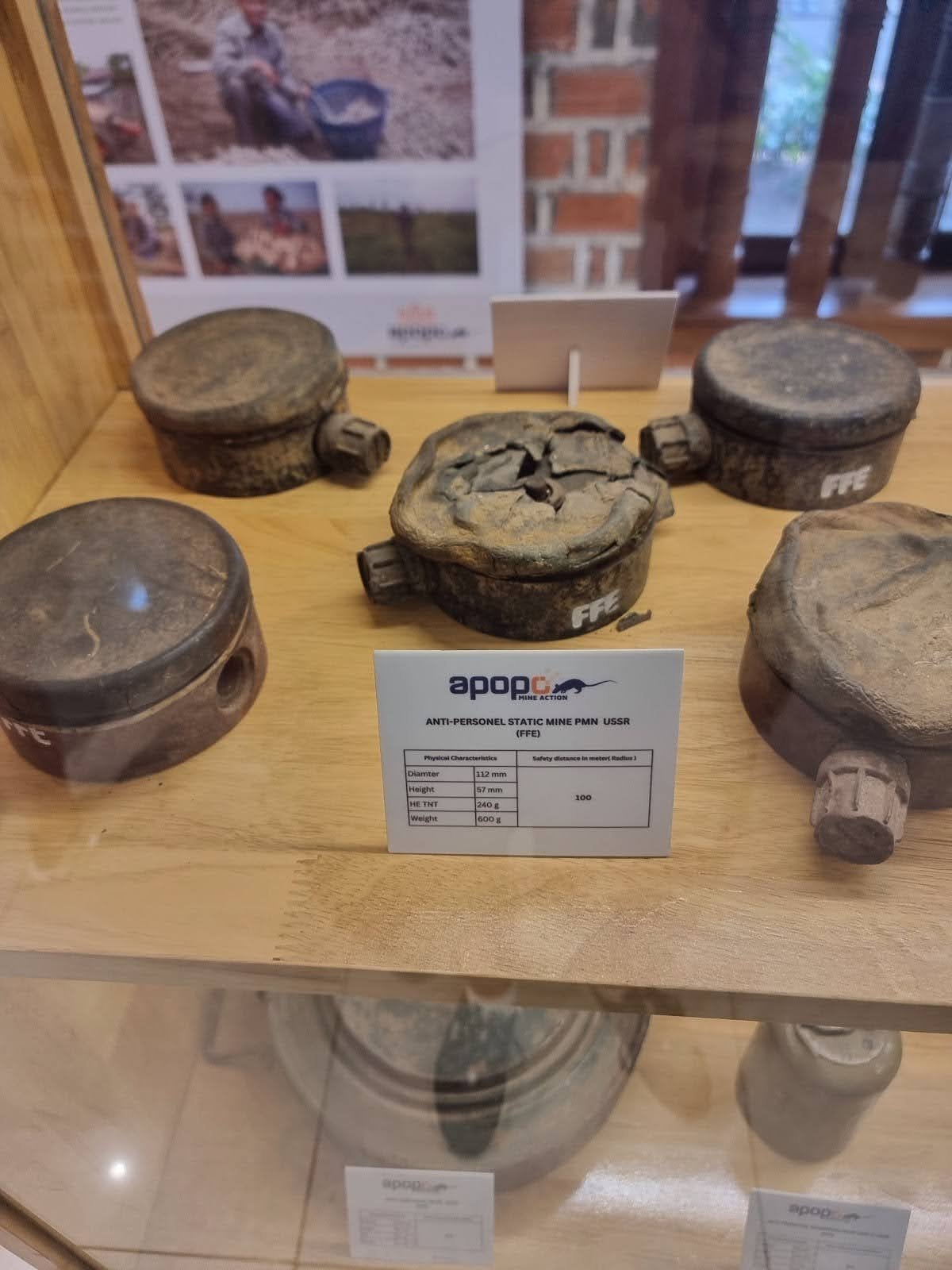
    At the start of the tour, you’ll be shown a video contextualizing the scale of the mine issue in Cambodia and explaining the work that APOPO does to clear UXO. Then you will be able to look through the centre at the displays of cleared explosives before heading out to the demonstration zone, where you finally meet the stars of the show: the HeroRATs.

    Recovered explosives housed in the APOPO Visitor Centre.
    Recovered explosives housed in the APOPO Visitor Centre.

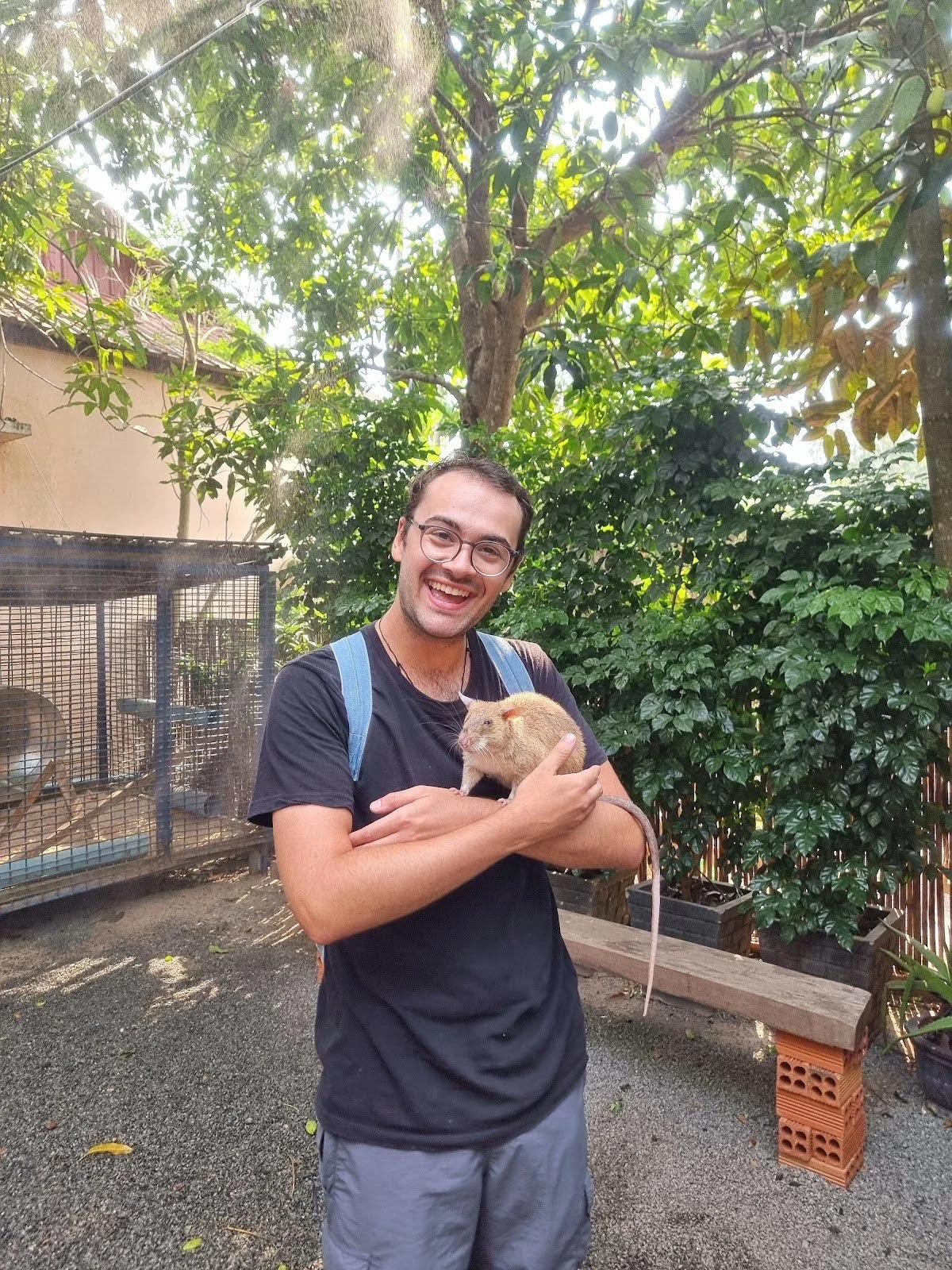
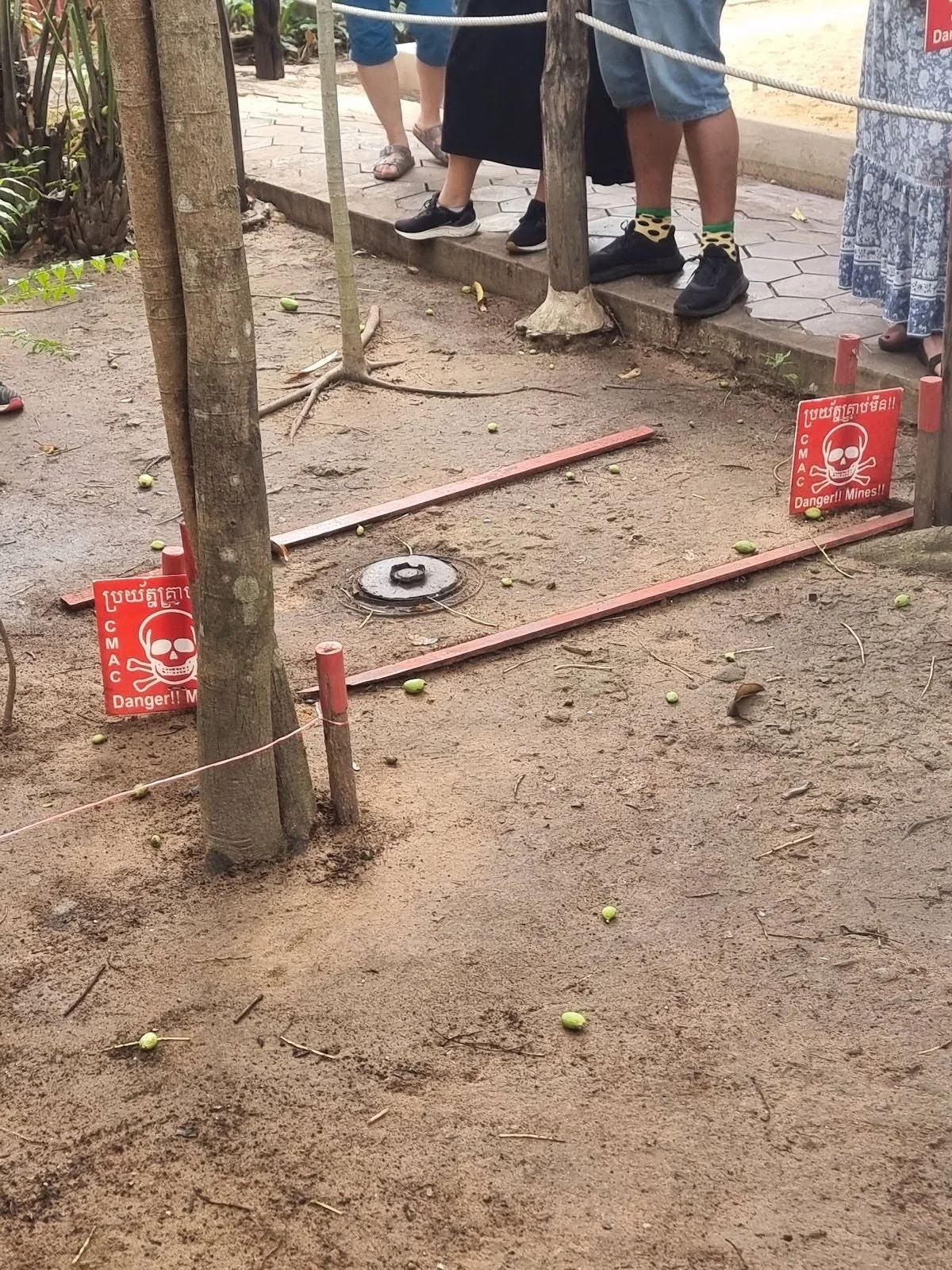
    Once outside, you get an up-close and personal interaction with the rats, even being able to hold one of them. Here, I learned that the rats are trained with a click toy to encourage them to hunt before they are introduced to the TNT scent. The weight of the rats allows them to detect mines without setting them off, and the speed at which they can locate the scents makes for an efficient way to clear large swathes of land. The rats are much quicker and safer than humans ever could be; once fully trained, they can clear an area the size of a tennis court in 30 minutes. To put that into perspective, it would take a human using a metal detector four days to clear an area this size. At the centre, you will also get to see a reenactment of how they scan for TNT, with defused mines laid out in the demonstration zone for the rats to sniff and detect.

    Demonstration area in APOPO Visitor Centre.
    Demonstration area in APOPO Visitor Centre.

    Undoubtedly, the hero and poster boy of the APOPO mission is Ronin, who in 2024 was awarded a Guinness World Record for being the most successful Mine Detection Rat in history, having detected 109 landmines and 15 items of UXO in Cambodia. Unfortunately, APOPO announced that Ronin had passed away after suffering health complications in February 2026. There is still a whole team of HeroRATs stationed in Cambodia, with 24 new rats arriving from their training base in Mozambique in October 2025.

    APOPO is a brilliant organization working hard to remove landmines and UXO from the Cambodian countryside and beyond. They strive to make the world a safer place and help countries move past their dark histories, and having recently celebrated 10 years of operations in Cambodia, they’re showing no signs of slowing down in their mission to help the country become completely mine-free. Taking a trip to APOPO’s visitor centre is especially enlightening when taking in the context of some of Siem Reap’s other important historical sites, such as the genocide museum and the killing fields. Visiting will give you a raw, unfiltered look into the horrors of the Pol Pot regime and an appreciation for Cambodia’s emergence from the dark history it is still facing the consequences of.

    GET INVOLVED:
    If you would like to support APOPO’s work, you can do so here.

    Note: This article was first published in Catalyst Planet

  • My Top 5 Bucket List Destinations (for now)

    My Top 5 Bucket List Destinations (for now)

    Some of the places at the top of my list to see

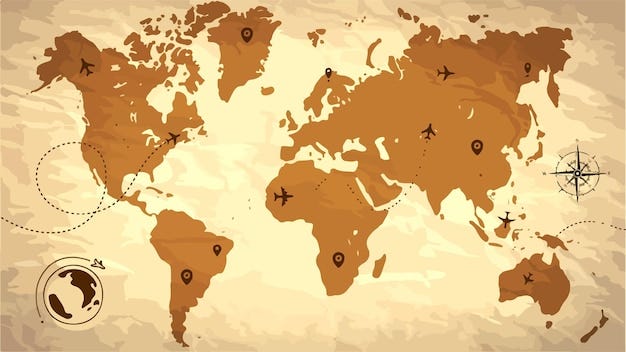
    A world map with arrows pointing to the right | Premium Vector
    Source: Magnific.com

    It became quite obvious to me last year that travelling is basically the best thing in the world. Finally leaving the small bubble of your hometown to explore the endless amounts of countries, cultures and cuisines, and meet people from all walks of life, is maybe the most fulfilling venture you can take. That said, you’ll never be able to travel to every corner of every country, so having a bucket list is a good idea. I thought I’d put mine down here, to remind myself of where I need to go next, but also to maybe give you some inspiration for where to book your next flight.

    1. South America

    Ok, I know this is quite vague. South America’s pretty big. But if I listed the countries separately then this list would be huge. I’ve actually been to South America once before: when I was 16, I spent a month in Peru and Bolivia through an expedition company that came to our school. We spent the time hiking the Salkantay Trek, making the walk up to the top of Macchu Picchu for sunrise, taking Jeeps across the Bolivian salt flats, learning how to make coffee by hand in the jungle, and eating lots (and lots) of street food. It was my first time going away somewhere without my family, and the first time I felt like I was travelling rather than just going on holiday for a couple of weeks. It opened my eyes to how much of the world there is to see, and it’s an experience that really changed my life. That said, I was only 16, and I went with a couple of teachers from school, so I feel like now I’m in a position where I could go back for longer and really explore on my own. Peru was amazing, and I’d definitely go back; we didn’t see any of Lima, just an overnight stop in a homestay before an early morning flight to Cusco, so I’d have to explore the capital. I also need some more Inca Kola, the greatest drink on the planet. I’d also love to go to Brazil and Argentina; these two countries have such great culture and history, and the food looks amazing as well. Plus, going to a game at River Plate’s stadium is on my footballing bucket list, as is the Bombonera, both in Buenos Aires. Football culture in South America is crazy (that’s soccer for you heathens in America), and experiencing the derby between River Plate and Boca Juniors would be insane. I’d love to trek through Patagonia and head down to the southermost point of the inhabited world (that might be in Chile actually… may be a reason to go there as well I guess).

    2. Eastern Europe

    Again, this is more a region than a specific place, but Eastern Europe is another place, but it’s definitely on the list. I am a massive history buff, and I find the story of Eastern Europe, especially post-World War 2, incredibly interesting. The sheer amount of change that the region has gone through over the last hundred years or so, from empires, to kingdoms, to Soviet satellites, to independence, is captivating. I’d love to go and explore the old cities, which have such a long history and culture; places like Dubrovnik, Split, Sarajevo, Budapest, Prague, Ljubljana, and so on. On top of that, the beer’s cheap. The floating hostels in Belgrade, along the Danube river, look incredible, whilst Fisherman’s Bastion and Buda Castle in Budapest are incredibly historic sites that I would love to explore. I’d really love to get a campervan and do a road trip around Europe, so starting somewhere a little cheaper than the western countries would be ideal. I actually wanted to do that a while ago but never got round to it. Getting a campervan here in Australia is in the plans as well, but we’ll see how we go. Regardless, Eastern Europe is a place I would love to explore; rich history, interesting cultures, cheap booze; what more could you want?

    Fun Facts about the River Danube - Budapest River Cruise
    The Danube River flowing through Budapest. Source: budapestrivercruise.com

    3. Russia

    Expanding on the Eastern European theme, I’ve added Russia separately because a) it’s so big that lumping it into one region would be unfair, and b) most of Russia is in Asia. Again, this is mainly for the history; Russia has such a fascinating past that I would love to go and experience. As well as that, given the size of the country, there are so many different cultures within its borders. I’d love to see the Red Square, the cathedrals of St. Petersburg, the (presumably) mountainous levels of museums spread across Moscow, revel in the architecture, explore the local food scenes. I’d also love to head out east and see some of the less populated places, and see how different life is there. The far eastern regions of Russia, near the borders with China and North Korea, would be amazing to go to, just to see how the people live. If anyone’s ever watched Bald and Bankrupt’s Youtube videos where he explores all the Soviet republics, you’ll see why Russia, and the rest of the former USSR, is so intriguing, especially when he goes off to the more remote areas and meets the locals. Of course, this probably won’t happen while the war is going on and Putin is still in charge. I think the government are probably a bit cautious of westerners trying to get in at the minute, especially from countries who have openly backed and supported Ukraine, like Britain has. But one day, hopefully, I’ll be able to visit.

    Of course, this shouldn’t be taken as an endorsement of the Russian government or what they’re doing in Ukraine. It definitely isn’t, but that doesn’t mean that visiting the country in the future should be ruled out. Most countries have had bad leaders who have done bad things at some point. I’m British, we’ve killed millions of people and occupied over a third of the world over the last 300 or so years; that doesn’t mean you shouldn’t come and see Stonehenge.

    4. India

    Another country with an incredible history is India. Again, like Russia, its sheer size means there is always somewhere new to explore and a new culture to get to grips with. As well as that, Indian food is some of the best in the world, so being able to taste it where it’s made would be amazing. Of course, the Taj Mahal would be a must-visit destination when in India, but there are so many other places that would be cool to see as well. From Goa to Puducherry, Mumbai to Delhi, there is such a wealth of culture, history, and cuisine to get through, that you’d have to stay for a good period of time to fully explore as much as possible. I would also love to travel to Kerala, which has a huge variety of environments, from coastal resorts and beaches to rolling hills and mountains, whilst the food is rich and varied. On top of Kerala, Kolkata also has a massively rich history and architectural landscape that would be amazing to see. Full of street art, markets, some of the best street food in the entire country (so Google says), as well as a whole host of museums and galleries, there is so much to see and do (and eat). India as a whole has over 40 UNESCO World Heritage Sites, and is one of the oldest civilisations in the world, so it is definitely one to explore in some depth.

    5. Ireland

    It doesn’t really make much sense that I’ve never been to Ireland, seeing how close it is to the UK. You can get there by ferry in about an hour, and flights are cheap and frequent. Either way, I haven’t yet been there. That needs to change, if for no other reason than to have a load of Guinness. Going on the hunt for the best creamy pint sounds like a pretty good reason to go on a Dublin pub crawl, but there is still so much more to see. The Ring of Kerry road trip looks like one of the most stunning in Europe, and there are places like Cork (home of the famous Blarney Stone, which is meant to bring good luck if you kiss it), Galway and Limerick to experience the history, landscape and culture. You’ve also go the Wicklow Mountains which would be a great place to hike and camp for a few days. On top of that, the Irish are renowned for being some of the friendliest people in the world, so you’ll have good craic in the pubs.

    Obviously, this is just a brief snippet into all of these places. I couldn’t possibly list everywhere in one article, but hopefully this is enough to get you inspired for your next trip, or to start thinking about making your own bucket list, so you know where you want to go and see.

    The Ring Of Kerry Drive: Itinerary, Highlights & Tips
    The Ring of Kerry. Source: youririshadventure.com
  • Top Ten Tips for First Time Solo Travellers

    Top Ten Tips for First Time Solo Travellers

    Heading off for the first time? Make sure you’re prepared with these handy tips!

    Https%3A%2F%2Fsubstack Post Media.s3.amazonaws.com%2Fpublic%2Fimages%2Fee210093 017f 4264 92c5 E2d5cd6f2d1e 2886x1416
    Once you get things sorted you could be experiencing views like this

    As a seasoned traveller (spiritually; in reality it’s only been four months), there are a number of things I learned on my first solo trip that I wish I’d known before I went. Some of them are fairly obvious and self-explanatory, but there are plenty of things that you can overlook with the hundreds of things you need to sort and organise before heading off. If you’re in the midst of planning your first solo trip, here are some tips that will hopefully help you out.

    1. Don’t overbook – be spontaneous

    Planning your route for the first time can be quite overwhelming. There’s so much to see and do; so many places you’ve seen fellow travellers raving about on Reddit, so many tours you’ve seen on GetYourGuide. How can you possibly condense it into one trip? (Hint: You can’t. So you’ll just have to go again.) While having a schedule can help you feel organised and ‘ready’ to go, once you’re there, it won’t take long for plans to change. And they should: you meet people, you want to hang out with them, they want to hang out with you. Maybe they planned to go somewhere you weren’t planning on; maybe you extend your hostel stay for a few extra days because you love it so much. Overbooking can destroy the spontaneity that should exist on these trips.

    Before my trip, I had an itinerary of everywhere I was going to go, and the exact amount of days I was going to be there for. While it still gave me a nice outline of my direction of travel and kept me on track to not run out of money or overstay any visas, I didn’t follow the plan that I had laid out months in advance. And it was still great. So don’t worry about it too much. Book your hostels a couple of days in advance (more on that later), and you can book transport with as little as 12 hours’ notice from your hostel to the next place you’re going; if you can’t book directly with the hostel, they’ll be able to advise you how to get there. Spend less time planning and more time imagining all the amazing things you’re going to do.

    Https%3A%2F%2Fsubstack Post Media.s3.amazonaws.com%2Fpublic%2Fimages%2F1361faec Ef02 44bd 8306 98dd7beb0856 919x786
    My Vietnam itinerary. It was far too regimented and scheduled, and I ended up visiting different places anyway.

    2. Don’t overpack

    No one likes carrying too much. Remember how it feels when you have to carry three bags of groceries when you thought you’d only have two, the handles of the carrier bags digging into your fingers, making you curse yourself for not just getting it delivered? Now imagine that with much bigger bags, for months at a time. Across multiple countries. See my point? Ideally you’ll fit everything you take into two bags: your big backpack for your clothes, shoes, toiletries, essentials etc., and a day bag, a smaller backpack you’ll take with you carrying the things you’ll need on a daily basis: a portable charger (always always always), sunglasses, a hat, a water bottle, sun cream, insect repellent, deodorant (these three particularly if you’re going somewhere hot and humid like SE Asia). If you can get away with it, even a bum bag would be ideal to fit that stuff in.

    That said, if you like buying souveniers like I do, you will probably end up with another bag. I left with everything across two bags and had to get another to store all the things I bought along the way. I probably had to overpack for my trip as I was moving to Australia at the end of it, so wouldn’t be going back home. If I hadn’t been, there were definitely things I would have left at home. It might be tempting to pack loads of underwear and shirts, as initially I wasn’t sure how the laundry situation would play out. That wasn’t an issue: every hostel has washing machines (and most of them have dryers as well). If they don’t, there’s always laundry places within walking distance of the hostel, and it’s always very affordable.

    Also, saving space when travelling is crucial, so make sure you buy some good quality compressing packing cubes for your backpack. These will help you keep everything organised, and save space in your bag. I got these Cipway ones off Amazon and they were perfect.

    Obviously, where you’re going and at what time of year will determine what clothes you pack, but take less than you probably think you need. Then you’ll still have room for all the magnets.

    3. ESims are useful, but can be costly

    A local Sim is a great way to avoid those pesky data roaming fees, but when you’re first travelling, you’ve got enough running through your mind to sort out without thinking about phone data. In fact, it wasn’t something I’d even considered until the day before I left, when I suddenly remembered that the £2 a month plan I’d switched to so I could keep my UK number wasn’t going to work in Bangkok. Enter the eSim. Easy to install and download, it gives you instant data the second you land, just the convenience you need to tick one problem off your list. Imagine making your way through customs, with that pit in your stomach that the officers are going to find something in your bag even though you know nothing’s in there; panicking that you haven’t got the right visa as you go through passport control, working out where to pick your luggage up from, and then BAM. No service, no accessing Google Maps to find out how to get to your hostel (of course the airport WiFi doesn’t work, what did you expect?), no booking a Grab/Bolt/Uber (depending where you are), having to get stung by the taxis waiting predatorially outside the airport for the innocent new arrival with no other alternative. Airalo is one of the best platforms for eSims and one that I used most of the time.

    Of course, with that convenience comes an added cost. The 30-day eSim with unlimited data in Thailand was £30, and it was data only, meaning no local number. You can find Sims for sale in the airports, although they are more expensive than the ones you will be able to find once you are out the airport and in the city. Have a look on Reddit for an idea of where the best Sim deals are when you land. While I did use eSims during my travels, they were significantly more expensive than local Sims, without having a working number if you needed to make a call.

    4. Hostelworld is your best friend

    This isn’t sponsored (although if you want to Hostelworld, hmu bby xx), but Hostelworld is the best way to book accommodation and find friends when you’re travelling. Not only do they have all the hostel options available in a given place, they also give you access to a city-wide group chat, including everyone else who has booked through the app. These groups are a hub of activity, with people making plans and inviting people to meet up and join them. You can set your interests in your bio so like-minded people can find you and vice-versa, and you can set that you’re looking to meet people, making it more likely for others to message you to see if you want to meet.

    I made countless friends through the Hostelworld group chats, from going out for dinner, meeting up for a drink, going to explore the local temples and sights, checking out a market, grouping up to split the cost of a taxi to a sunset spot and stopping for drinks on the way back, you’ll meet as many people as you want through this app. And it’s free. Can’t argue with that.

    Seriously Hostelworld, collab???

    5. Cash is king

    Again, this depends where you’re travelling to, but in Southeast Asia, having cash is vital when it comes to paying for the everyday items. Buying food from a stall, getting goods from a market, even going to the supermarket for supplies: many places don’t accept card, so cash is super important. Stopping at an ATM will become an almost daily routine. It will also help you get around foreign transaction fees that your bank might have set. I set up an account with Monzo before I left – they are an online-only bank in the UK that have no foreign fees, so it was a good way to cut the costs down a little.

    As an aside, if you’re in Thailand, when using a foreign card at an ATM, the machine will ask if you want to confirm the conversion rate. Always press NO: these rates are set by the banks and are really low, if you press no, then it reverts to the international conversion rate; at times, I got an extra £8 than I would have if I’d accepted the ATM’s rate. Plus, any leftovers can go in your scrapbook and look cool. Or keep them in your wallet and let it be a daily reminder that you have unfinished business with that bun cha place in Hanoi’s Old Quarter.

    6. Learn some handy phrases in the language

    It always helps when you can understand what people around you are saying. If English is your first language, you are blessed, and you will very quickly realise that. On my travels, I met people from all over the world, and the only reason I was able to talk to them was because they all speak English. It did make me realise how fortunate I am to be a native English speaker. Don’t take it for granted though; make an effort to learn some of the basic phrases at least. That way you’ll be able to get by a little. Learning how to say hello, goodbye, please and thank you will get you a long way with the locals. Of course, Google Translate is great for helping you out when you need to put together a sentence or question, but taking the time to learn some of the lingo will really enhance your trip. There are plenty of sites and forums where you can learn the basics, and YouTube is obviously a wealth of information.

    On top of that, learn the local customs: how to greet people, how to use your hands, whether it’s rude to have your toes pointed at someone when you’re talking to them. It’s the little things that show the locals you’re not an ignorant tourist, and that you actually care about and respect their culture.

    7. Hostel activity nights are great to meet friends

    Hostels are where other travellers are staying, right? Why wouldn’t you hang out in them to meet people? All hostels have events on different nights of the week. From pub quizzes, pub crawls, beer pong tournaments (they mainly revolve around drinking), to organised walks, tours and cooking courses, there’s something for everyone. I even stayed in some who put on yoga sessions every morning. This is the perfect way to meet other travellers and team up. Most nights, hostels will have a happy hour (or even an hour of free beer, like the hostel I stayed at on Cat Ba Island, who also did free breakfast every day and a free barbecue every Wednesday – great for my bank account, bad for my waistline), the perfect way to get to know other travellers over a cheap beer or cocktail.

    And, of course, talk to your roommates. I mean, they’re right there. 99% of other solo travellers will be easygoing and approachable, especially when you’re going to be sleeping in the same room. When I arrived at my hostel in Koh Tao, I got talking to the girls in my dorm, we hung out for the four days I was there, we learnt to ride motorbikes, went to the beach, went out drinking, and then two months later I ran into one of them at my hostel in Phong Nha. Small world. Or in Kampot, Cambodia, when three girls travelling together from England and one girl from Germany moved into my room the day after I got there; we went up to the bar for happy hour, and hung out for the next three days with a German guy the German girl met while checking in. Over a year on, we’re all in a group chat together, and I’ve been hanging out again with one of the English girls who is over in Sydney for a few months. Plus, making friends from other parts of the world gives you an excuse to go there to see them (and maybe even get somewhere to stay for free).

    8. Eat where the locals eat

    If you’re a foodie like me, trying new cuisines is one of the best parts about travelling. Your eyes (and mouth, and nose) are opened to a whole new universe of flavours, ingredients, methods, and smells. You might even have no other option but to learn how to use chopsticks. While there’s nothing wrong with treating yourself to a meal at a nice restaurant, the best meals are the ones where you can’t read the menu and have to point at the pot of boiling brown-ish liquid that the old woman on the other side of the cart has had bubbling away since 6am, eaten on a plastic stool on a low table on the side of the road with a cold beer to wash it down. Those are the meals I miss the most. On your own, these spots are fantastic; with some friends (that you met using all the handy tips I’ve given you) they are the most memorable moments of your trip.

    Allow yourself to get lost through the maze of markets and food stalls; let your nose guide you to your destination like a 1950s cartoon character wafting towards the cherry pie sitting by the open kitchen window. Find a stall or roadside eatery where the menu is one side of A4, laminated, and only in the local language. Make sure an old person is the one behind the pots, and make sure you load it with chilli. When they point at something, nod. When they go to add the weird meat that you’ve never seen and have no idea whether it’s flesh or innards, let them. They’re the ones cooking. And when you’ve finished every drop, every slurp of the heavenly, sweet, salty, spicy broth that wasn’t absorbed into those fresh noodles, remember that you could’ve just had a Big Mac instead.

    Https%3A%2F%2Fsubstack Post Media.s3.amazonaws.com%2Fpublic%2Fimages%2Fe5a55df3 00e8 4859 B8e9 32f5d6c447bc 4000x3000
    Meals like this are everywhere if you’re willing to explore

    9. Get travel insurance

    This is a non-negotiable. Make sure you are insured if you go anywhere. You don’t want to end up uninsured in a foreign hospital, not knowing what’s going to happen or how much it’s going to cost you. One accident could cut your trip short if you end up using all your funds on treatment. All the big insurance companies offer coverage for solo travelling, with options covering multiple countries, and a range of activities. I took my insurance out with True Traveller; coverage for the 127 days I was travelling cost £356, including coverage for my luggage, money, documents, and phone. That’s less than £3 a day. There’s really no excuse to not get it. Luckily I didn’t have to make a claim on my insurance, but better safe than sorry.

    Side note: If you’re going to Vietnam and plan on doing the Ha Giang Loop (which should be everyone going to Vietnam; if you aren’t, change your plans IMMEDIATELY), most insurance companies no longer cover the Loop due to a “high number of claims” (pretty sure the point of insurance is so we can make a claim but whatever), so you’ll have to book through a company like Big Cat who do cover it. Cover for the 4 days, including luggage, cost me £54.

    10. Get used to riding on the back of a motorbike

    I guess, again, this depends where you’re going. This is very much based on my experiences in SE Asia, where Grab and Bolt bikes are everywhere and are super, super cheap (by cheap, I mean they were like 20p). And also, when it’s 35 degrees, you don’t want to have to walk everywhere, do you? I didn’t get on the back of a Grab bike in Bangkok; it took me nearly a week to pluck up the courage; I’d never been on a bike before then, and holding on for dear life for the first, five-minute trip, I lost my hat on the streets of Chiang Mai. Luckily, I found an identical one the next day and all was forgotten. But, very quickly, you’ll realise that the Grab drivers actually know how to ride a bike, and it will soon become one of the best parts about the trip; whizzing about the city on the back of a bike, weaving in and out of the manic traffic, wind blowing off your face (not through your hair, wear a helmet please), taking in the scenery.

    If you’re elsewhere, I guess the recommendation would be to make sure you know your way around the public transport system, if there is one. I would imagine if you’re in Europe for instance, Ubers will be significantly more expensive than the Grabs are in Thailand and Vietnam. Public transport is still a great way to get about and see your surroundings, and I particularly enjoyed the Metro in Bangkok. Either way, knowing how to get about without having to rely on expensive taxis is definitely one of the best ways to keep your expenses down. And of course, don’t forget about just going for a walk. Let yourself get lost down the side streets and back alleys. That’s often the best way to truly, fully explore somewhere, off the beaten path.

    Hopefully these tips will help you as you prepare for your first trip. Not everything will go to plan, and that’s okay. Obviously there are more to check through before you leave, such as visa and vaccination requirements. Just embrace everything that comes your way, and enjoy every second of it. You’ll probably realise within a couple of days, once the jetlag wears off, that you’ve just made the best decision of your life.

  • Landing in Hanoi: The First Days in Vietnam

    Landing in Hanoi: The First Days in Vietnam

    On arrival in Vietnam’s capital, exploring the sights and the smells of the streets


    Vietnam has always been top of my travel list. From watching James May ride through the country with a colander on his head as a child, to reading about the Vietnam War and the devastation it caused, to iconic films like Platoon and Good Morning, Vietnam, before finally becoming enthralled with the food and flavours, it was the one country that I told myself I would visit and explore. It got to the point that I was actually a little worried that I had bigged it up so much in my head that it couldn’t possibly live up to the expectations that I’d set. As I sat in the airport at Siem Reap, waiting to fly to Hanoi, I wondered whether the Land of the Blue Dragon would hit the heights I’d imagined. Then I landed.

    Turns out I didn’t need to worry at all.

    The ride from the airport to my hostel was fairly standard. I booked a Grab and headed off to my accomodation, which was directly opposite the cathedral. Good start. After I dropped my bags off, I did what I always do when arriving in a new place: I went for a walk. I had arrived at 9pm, and so I needed to go and get something for dinner. Heading out of my hostel, I was immediately greeted to a sight that I would not tire of: bunting adorning the streets of the Vietnamese flag and the hammer and sickle, with motorbikes parked alongside.

    Https%3A%2F%2Fsubstack Post Media.s3.amazonaws.com%2Fpublic%2Fimages%2Fcc844b3d 1267 4c3d 95e7 606d63e7aa13 4000x3000
    Is this not the most Vietnamese street you’ve ever seen?

    The air was cool, the atmosphere was lively, there were horns blaring in all directions, something you very quickly get used to. There are nearly 77 million motorbikes in the country, so the chaotic roads become second nature after a few days. I very quickly knew that Vietnam was indeed going to live up to the hype. I walked around the area until I found some refreshments. First, I stopped at a juice stall, Tiệm trà trái cây Bibin, and got a freshly squeezed orange juice (35,000 VND, £0.98 – you’ll see why it’s so easy to eat and drink here), where I bumped into an American man who had married a Vietnamese lady and had moved to the north of the country. We had a good chat, he gave me some recommendations and his business card for his ice-cream shop in the north of the country, inviting me if I was ever in the area. Then, he kindly offered to pay for my juice, before departing into the night with his wife. After I finished my juice, I headed next door to have my first Vietnamese phở.

    Https%3A%2F%2Fsubstack Post Media.s3.amazonaws.com%2Fpublic%2Fimages%2F34bc6810 F384 473b A337 89f8fc469f91 4000x3000
    That sweet, sweet brothy goodness… and the first of many, many MANY Vietnamese beers

    I found myself at Phở Gà Nguyệt, just a four minute walk north of my hostel. A phở place that only does chicken – a varying mix of breast, thigh, back, wings, and offal. When I arrived at 11pm they only had chicken breast left, so they gave me extra meat. The phở cost me 55,000 VND (£1.55 – see?!), while the beer, Bia Hanoi on this occassion, was a whopping 20,000 VND (£0.56!! – dangerous). It was everything a phở is supposed to be – rich, soothing, with big chunks of tender, juicy chicken. The chillies were as spicy as you would expect, and the vibes of sitting on a plastic stool on the side of the street, watching the late night crowd go by with a hot bowl of broth and a cold beer, were every bit as exhilarating as they were in Thailand and Cambodia previously. But Vietnam feels different, it is different. Everyone I’d met who’d been to Vietnam already had told me. Now I was starting to understand what they meant. All I’d done was land, drop my bags off and get some dinner, and I felt the difference. And I still had another six weeks to go.

    Thanks for reading Another Brit Abroad! Subscribe for free to receive new posts and support my work.

    The next day consisted of some sightseeing. I decided first to check out the Cathedral, seeing as it was right outside my hostel. As in, I was awoken by the bells chiming on the hour, and I could see it out my dorm window. The scale of the building was magnificent, and walking through the streets you could feel the remnants of French occupation in the buildings: the cathedral was one of the first buildings in Hanoi to be constructed by the French colonial government in the 1880s. It was then shut down after the Viet Minh took control of North Vietnam until 1990, when Mass was allowed to observed on Christmas Eve. It was built in the Neo-Gothic style, which is why it stands out as being very ‘European’-looking. I then took a walk up to Hoan Kiem Lake, just a ten minute walk, taking in the picturesque views of the famous red bridge and Ngoc Son, a temple on an island in the middle of the lake, an ideal spot for peace and serenity in the heart of the bustling city. After a pleasant stroll around the temple, it was time for lunch.

    Https%3A%2F%2Fsubstack Post Media.s3.amazonaws.com%2Fpublic%2Fimages%2F2e46cb8b A105 4e59 Be24 6a594ab0a783 4000x3000
    The entrance to Ngoc Son Temple

    The bánh mì was born in 1950s Ho Chi Minh City, pairing French produce introduced in the 1860s – baguettes, pate and mayonnaise – with Vietnamese staples such as pickled daikon and carrots, chilli sauce, and local cuts of meat. The invention came a out following the partition of Vietnam in 1954, when over a million North Vietnamese moved south. When in Vietnam, you will eat hundreds of them. I certainly did. My first encounter of the legendary food came at The Banhmi by Kun, and was the classic filling of Vietnamese sausage, with plenty of pate and pickled vegetables. The crunchy bread, smooth pate, crunchy pickled vegetables, spicy chilli sauce and fragrance of the sausage was a match made in heaven. There’s a bánh mì spot on pretty much every street in Vietnam, so go and explore.

    Https%3A%2F%2Fsubstack Post Media.s3.amazonaws.com%2Fpublic%2Fimages%2F75f7bdda C566 4943 8b7e 0a12f533e672 4000x3000
    Bánh Mì 1/????

    After that, it was time for a coffee. I’d stopped in a few shops and bought some souvenirs which I sent home, and now I’d worked up a thirst. Vietnamese coffee is essentially rocket fuel. It’s stronger than any coffee I’ve ever had, so a word of warning: if you have it black you’ll be awake for about three days. Luckily, Vietnam does some incredible things with coffee, the most notable of all being egg coffee. Created in the 1940s when milk became a scarcity, egg coffee consists of egg yolks whipped with sugar and condensed milk, and poured on top of an espresso. It’s thick, rich, and desert-like, cutting through the strong coffee perfectly.

    Https%3A%2F%2Fsubstack Post Media.s3.amazonaws.com%2Fpublic%2Fimages%2F9cc7369a 4bca 4fba 9938 33bc58ea778f 4000x3000
    Egg coffee

    Vietnam might be one of the best places to eat and drink in the region, and possibly in the entire world. The variety of broths, noodle and rice dishes, grilled meats, sandwiches, and coffee means you will never go hungry and never get bored. And it’s super cheap as well. More importantly, so is the beer. In some places you go, beer is actually cheaper than water. Some of my favourites outside of phở and bánh mì include bún bò Huế (a spicy noodle soup form the ancient capital), bún chả (a cold noodle coup with grilled meatballs and herbs), cơm tấm (broken rice served with pork ribs, a specialty in Ho Chi Minh City).

    My last stop that evening was, of course, Train Street. The famous narrow street where you can grab a spot at a bar, cafe or restuarant as on the side of the tracks and watch a train pass through the centre of Hanoi. Very much a tourist spot, as the drinks and food are much more expensive than elsewhere in the city, but if you’re going to Hanoi you can’t not go. The seats are super close to the tracks so make sure you don’t get run over. Lots of people make a souvenir by sticking their beer cap on the track for the train to flatten it.

    Firefly
    Train Street at peak evening time

    Another must-visit spot in Hanoi is Hoa Lo Prison. It was set up originally to house Vietnamese political prisoners under French rule, before it was turned into a prison for American POWs during the War. It has since been converted into a museum. The entry fee is 50,000 VND (£1.40), and for the same price you can rent an audio guide. The museum consists of the original French-built section for political prisoners, the guillotine room, and living quarters for Vietnamese prisoners. Much of the Vietnam-war era section has been demolished, and there is just one room dedicated to the American POWs, including former U.S senator John McCain, who was held there.

    After my time in Hanoi, I went north to do the Ha Giang Loop. That’s another story for another time. But Hanoi let me know that Vietnam would be everything I had imagined it to be, and much more.

  • The Day I Fell in Love with South East Asian Food

    The Day I Fell in Love with South East Asian Food

    Discovering my favourite dish in the world, and my love of all things noodles, in Chiang Mai

    It seems weird to say now, but before I left England, my experience of Asian food was Chinese takeout and the occasional dabble into rice and noodle dishes that my mum would make at home (we ate a lot of rice, but it was just boiled, or occasionally egg-fried). I couldn’t use chopsticks, but I thought I could handle spice pretty well. I watched a lot of cooking shows and videos and was fascinated by the endless array of broths, soups, spices, use of unusual cuts of meat (chickens feet, tripe, insects), without ever having the opportunity to explore it first-hand. The only options for food in my town were fish and chips (not that that’s a bad thing), an endless array of Chinese takeaways, all mainly serving the expected staples of chow mein, a non-descript chicken curry, chicken balls, and an omelette for those odd enough to go to a Chinese takeaway and not get anything remotely Chinese, and the Indian curry houses which became popular in my late teen years after a night at the pub. There was also one Italian restaurant, which I worked at for seven years, which exposed me to my love of cooking and food (and now I make a great bolognese), and probably explains why Italian is my go-to cuisine.

    That all changed when I landed in Bangkok. I’d finally built up the courage (and funds) to book a one-way ticket out of England to see some of the world. Sitting at the departure gate at Heathrow, waiting to board my twelve-hour flight, my head was filled with all the sights, sounds, smells and tastes I was to encounter in my four months on the road. The organised chaos of the roads, endless motorbikes roaring past, zebra crossings made redundant as you fight your way across the streets. The wafting scents of food stalls and street markets, vats of broth bubbling away for hours on end, the olfactory nerves on high-alert, ready to search for the one dish that could change your perception of the world. I dove head-first into street vendors in Bangkok: a Pad Thai on Khaosan Road (eaten with a fork, the true western heathen I was); varying noodle soups at a stall round the corner from my hostel and the flower market; an array of barbecued meat skewers and grilled fish from Chatuchak Market; a tom yum goong in Chinatown, full of fragance and spice. These were all great, and had me excited for the rest of the food that was to come. But then it was time for me to leave Bangkok and head to a city which quickly became my favourite in the world.

    Chiang Mai.

    If you’ve ever been to Chiang Mai, then you already know what dish I’m talking about. On my travels I met plenty of people who have been to Thailand’s second city, and every single one of them loved it as much as me. And it’s not just the food here that’s amazing: the scenery, culture, attractions; everything about Chiang Mai draws you in and makes you never want to leave. The old town square, surrounded by a moat (old school) built in 1296, has the perfect mix of serenity, nightlife and culture, with plenty of temples and monuments to get lost in, as well as, of course, being close to the Doi Inthanon National Park and numerous elephant sanctuaries (pick an ethical one please). But, obviously, anyone who’s been to Chiang Mai talks about one thing and one thing only: khao soi.

    Https%3A%2F%2Fsubstack Post Media.s3.amazonaws.com%2Fpublic%2Fimages%2F50665531 D3c2 4758 95f0 8e43a963d79c 659x879
    The first, life-changing khao soi

    11th February 2025. 8:39pm. That’s when I first laid my eyes on such wonder.

    That glorious bowl of rich, thick, coconut milk broth; luscious egg noodles; tender, fall-off-the-bone chicken drumsticks; those crunchy fried noodles; the kick of the chilli oil; the sweetness of the raw onion; the punch of lime juice; the tartness of the pickled mustard greens: heaven. Wash it down with a Chang and you’ve got one of the best meals on the planet as far as I’m concerned. That first spoonful of the broth told me that, just five days into my four-month long adventure, I was exactly where I was supposed to be in the world.

    Thailand has many great dishes: pad kra pao, massaman, panang, drunken noodles, boat noodles, a whole host of fried rice dishes, the famous papaya and mango salads, and, of course, mango sticky rice, maybe the best dessert out there. South East Asia as a whole has some of the best food in the world; loc lac (a personal favourite of mine from Cambodia), pho, bun cha, bun bo Hue, the humble bahn mi (I like Vietnam, can you tell?), larb to name a few. But nothing will ever compare to that first bite of khao soi at that market in Chiang Mai. It opened my eyes to the fact that there’s so much more to Thai cuisine than just fried rice and fried noodles. The complexity of flavours in one bowl was mind-boggling. And, eating so much khao soi in my five days in Chiang Mai helped me learn how to use chopsticks. Now, I’m a pro (ok, maybe not).

    The khao soi isn’t the only food from the city that stays in my memory, though. One night, whilst a few Changs in, myself and the group of friends I had made through Hostelworld ventured through the streets looking for a quick meal. We stumbled (literally) upon a small restaurant five minutes before close, and they were gracious enough to make our order to take away. Fish and pork isn’t a combination particularly popular in England, so when, in my drunken and curious state, I saw a salted fish and pork mince fried rice on the menu, I went for it. I don’t know what restaurant it was, but that plastic takeaway tub of fried fish, pork and rice I ate sitting on a bench looking out over the old square’s moat was quite comfortably the best food-after-a-night-out that I’ve ever had. And I’ve had some good kebabs.

    Https%3A%2F%2Fsubstack Post Media.s3.amazonaws.com%2Fpublic%2Fimages%2Fc4114ecc Ee05 4a8b A59d 0c6b964ad908 659x879
    The drunk food that I will never forget

    I even took the time to learn how to make the khao soi paste from scratch. Black cardamom (the key ingredient) turmeric, ginger, shallot, garlic, a heap of dried chillies, pounded and turned into a paste, fried off with coconut milk, water, soy sauce, palm sugar and fish sauce. I followed this great video:

    The only thing that was really missing from the authentic, Chiang Mai stalls was the thickness of the broth. Perhaps a cornstarch slurry would do the trick? Anyway, I highly recommend making it for yourself, even if you have a good khao soi available near you (Sydney has a few that I’ve discovered so far, Melbourne has a fantastic restaurant called Khao on La Trobe Street). A good Asian grocery near you should have the black cardamom which isn’t typically sold in restaurants, and the pickled mustard greens; I’m sure you can order them online as well. If you’re veggie or vegan, you could replace the meat with tofu, tempeh or mushrooms, and omit the fish sauce for salt. Regardless of your dietary preferences, make khao soi, or get it from a restaurant, and then come back here and tell me it’s not the greatest meal you’ve ever had.