Tag: vietnam

  • The Victims of Agent Orange Making a Living Crafting Art

    The Victims of Agent Orange Making a Living Crafting Art

    On the outskirts of Ho Chi Minh City, victims of American bombing achieve financial independence through their unique artwork.
    Agent+orange+1

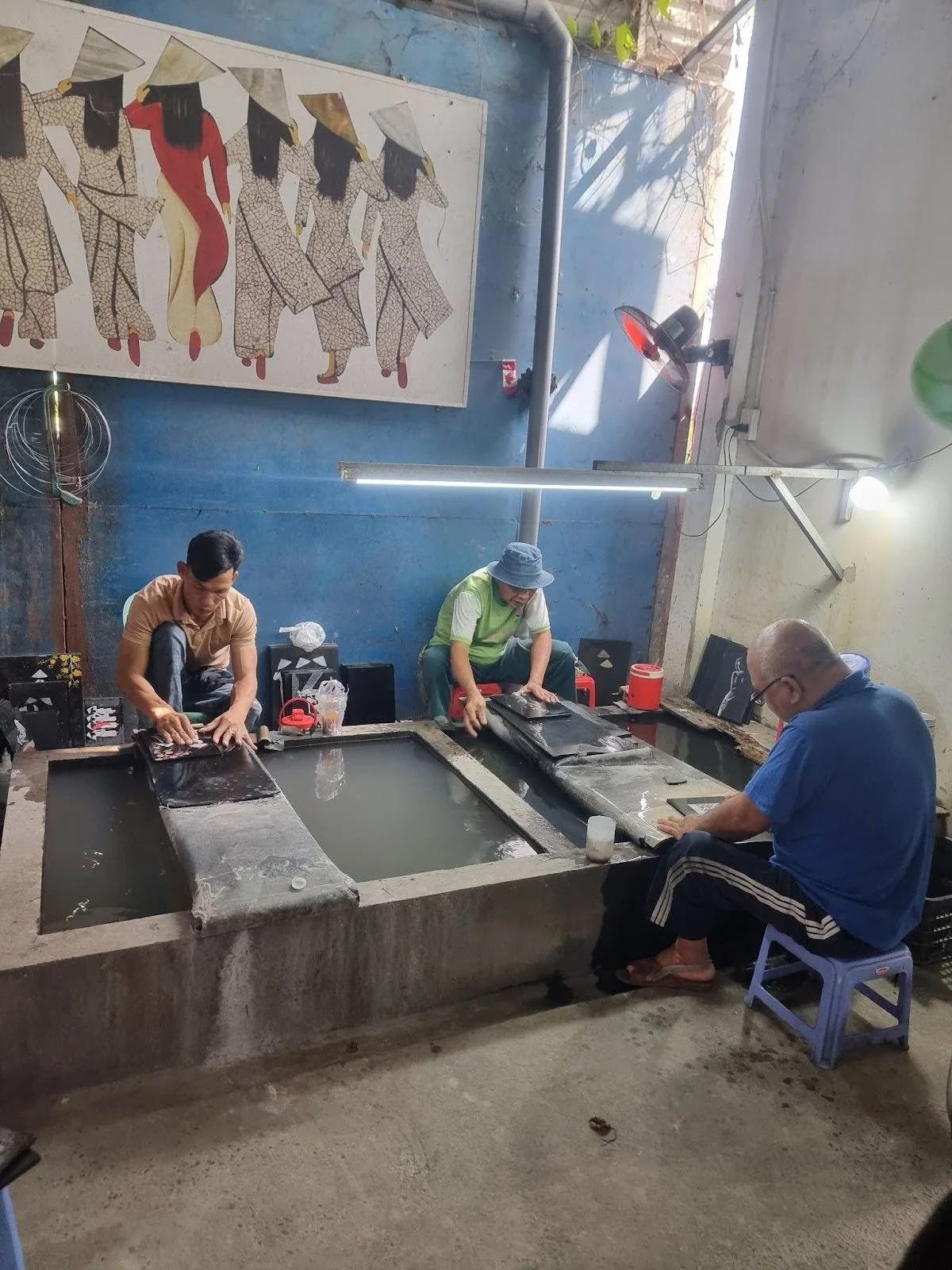
    If you ever find yourself in Ho Chi Minh City, it is almost a given that, at some point in your journey, you will travel to the Cu Chi Tunnels. Located just under 30 miles north of the country’s largest city, this famous spot along the Vietnam War-era network of underground tunnels has become a must-see attraction. There are a myriad of tour operators running daily trips to the tunnels, no doubt with some stops along the way. On my tour, our first visit was Lang Viet Lacquers, a small art factory on the outskirts of the city with a unique story.

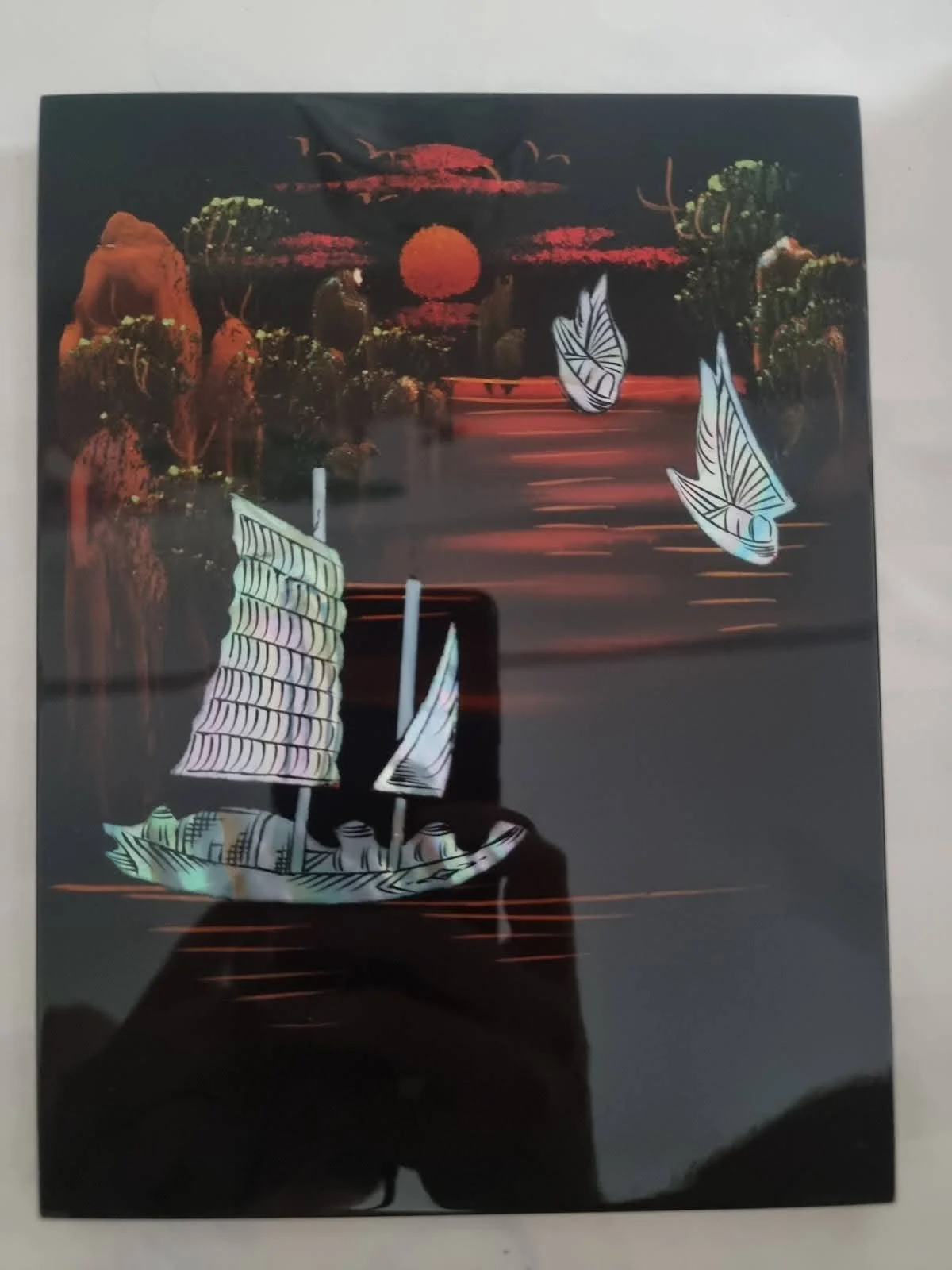
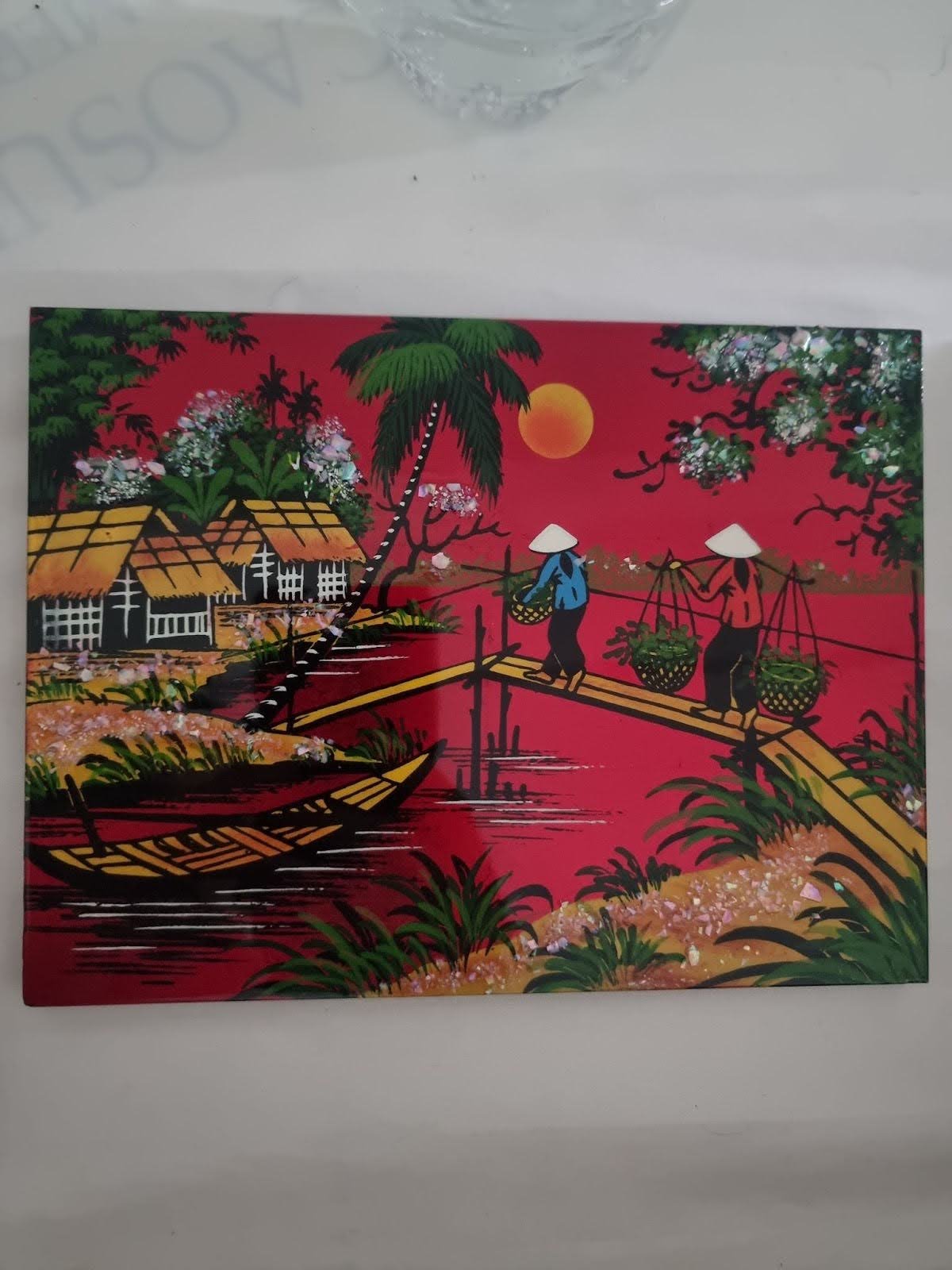
    Lang Viet Lacquers, situated in the city’s northwest, is a government-supported enterprise allowing victims of America’s brutal Agent Orange bombing campaign to achieve financial independence through lacquer painting, an art form that has existed in Vietnam and Southeast Asia for over 2,000 years. The stunning artwork consists of rich, almost reflective colors, with the addition of eggshell and mother-of-pearl to create bright, contrasting sparkles against the background.
    Agent+orange+2
    Agent+orange+3
    My two purchases from Lang Viet Lacquers.

    Arriving in the intense heat of the Vietnamese sun, we stepped off the coach and were ushered into the workshop, where we saw firsthand the artwork being created with painstaking care and detail. We were told how all the artists are victims of Agent Orange, the herbicide sprayed in large quantities over Vietnam by U.S. forces during the Vietnam War. These victims are not just war veterans; the devastating effects of Agent Orange were passed down to descendants of those affected, and the succeeding generations have suffered greatly in turn. For each work of art sold, the proceeds go directly to the artists, helping them achieve financial independence. Many of the injuries and conditions they suffer from mean they cannot work in the traditional sense, predominantly due to mobility or developmental issues, so this outlet allows them to maintain their freedom. In their shop, you are able to purchase a wide variety of items, from small souvenirs to large, wall-hung art, so there is something for everyone’s budget and luggage space.
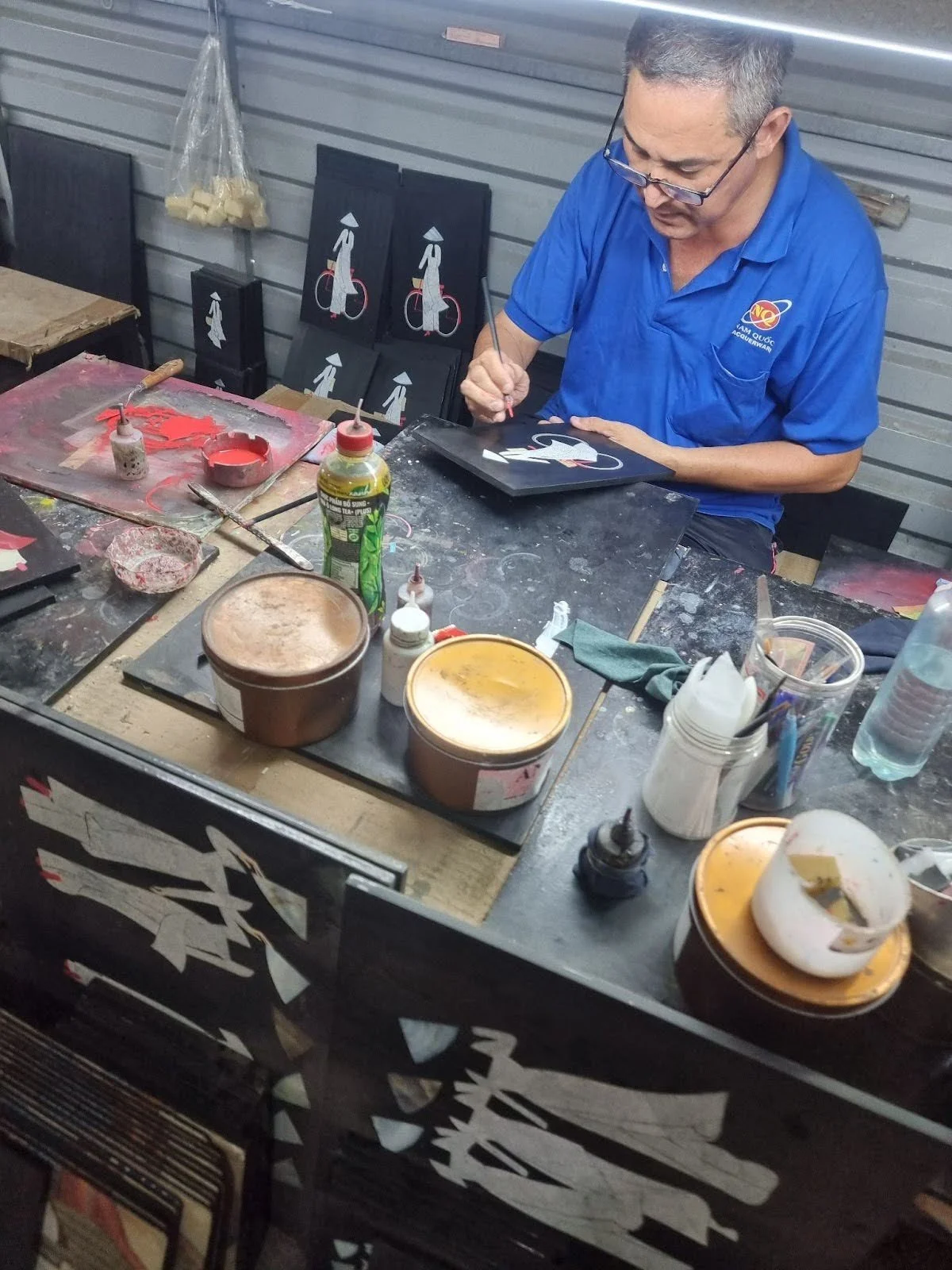
    Artist adding finishing touches to painting.
    Artist adding finishing touches to painting.

    The actors behind Agent Orange initially claimed their intent to destroy the Vietnamese jungle and root out guerrilla forces deep in the overgrown countryside, but the effects were much more serious and long-lasting. Being sprayed across almost 3 million hectares, over 4 million Vietnamese were exposed to the chemical, and while those directly exposed suffered from health issues, such as multiple neurological disorders, increased cancer rates, heart disease and serious skin rashes and scarring, the effects of Agent Orange were also passed onto their children and grandchildren. Later generations of Vietnamese citizens whose parents and grandparents were victims of Agent Orange have suffered from cleft lip, heart defects, birth disorders leading to lack of limbs, increased cancer rates, congenital heart diseases and severe learning disabilities, to name a few. Studies have shown that Vietnamese exposed to Agent Orange also have a higher rate of dioxins in their bodies, which are highly toxic pollutants that can cause issues like chloracne, cancer, immune and reproductive problems, developmental issues and chronic illnesses.

    One of the reasons for the continued effects of Agent Orange on the younger generations is the fact that these dioxins are still found in Vietnamese soil, water and food chain. It is consumed through contaminated crops and livestock, breathed in via dust and absorbed through the skin, meaning that Agent Orange has continued to plague Vietnamese civilians for decades after the last of the chemical was dropped on the country. Additionally, dioxins have a half-life of 7 to 11 years, meaning that the strength of the chemicals did not decrease until approximately 1980 and is still present today, although in lower quantities and intensity

    Agent Orange also had a strong impact on Vietnamese wildlife: A post-war study found 24 species of birds and 5 species of mammals in an area of forest that had been heavily sprayed, compared to two non-sprayed forest areas that each had over 100 bird species and at least 30 mammal species. Studies have found that the rate of miscarriages and birth defects was significantly higher in women who had been exposed to Agent Orange. Research has also shown that U.S and Australian soldiers who were exposed to Agent Orange have a much higher risk of elevated blood pressure and tumors, among other health issues, while those soldiers exposed to the dioxins had a higher rate of soft-tissue sarcoma, a rare type of cancer found in muscle tissue. A 2021 study also found that American veterans exposed to the herbicide were almost twice as likely to develop dementia.

    The United States began to deploy herbicidal agents in Vietnam in January 1962, with the launch of Operation Ranch Hand, although the first major operations did not begin until September, when mangrove forests on the Mekong River were targeted. The majority of Agent Orange usage was between 1966 and 1969, with an estimated 170 kilograms of dioxin dropped on Vietnam and even more sprayed onto the border areas of Laos and Cambodia. By 1971, the evidence of the harmful effects was beginning to be known, and the U.S. government halted all herbicidal spraying operations in Vietnam, with the remaining stock destroyed by 1977.

    The use of Agent Orange was incredibly controversial at the time. The Federation of American Scientists urged the U.S. government not to use chemical and biological weapons unless used by the enemy first in 1964, concerned that the government was not discriminating between military and civilian targets. In 1966, a group of scientists led by John Edsall of Harvard University appealed to President Lyndon B. Johnson to ban the use of such weapons. The statement reads, “such tactics are barbarous because they are indiscriminate; they represent an attack on the entire population of the region where the crops are destroyed, combatants and non-combatants alike.” Similar protests continued for the remainder of the war.

    If you are able to visit Lang Viet Lacquers, it is well worth the trip. Being able to purchase some great souvenirs, along with helping those who have suffered the consequences of America’s brutal war, is a worthy highlight of a trip to Vietnam. I’m a big believer in leaving somewhere better than I found it, embracing local cultures and giving back to the communities I have discovered through my travels, and this is a great way to do all three.

    GETTING THERE:

    Lang Viet’s is located just nine miles north of the airport. You can book a Grab Bike from the centre of Ho Chi Minh City near Ben Thanh Market, Saigon Central Post Office, Independence Palace or the Cathedral for about four dollars. It is also served by buses 13, 24, 74 and 94, which stop just outside the shop.

    Note: This article was first published on Catalyst Planet

  • Landing in Hanoi: The First Days in Vietnam

    Landing in Hanoi: The First Days in Vietnam

    On arrival in Vietnam’s capital, exploring the sights and the smells of the streets


    Vietnam has always been top of my travel list. From watching James May ride through the country with a colander on his head as a child, to reading about the Vietnam War and the devastation it caused, to iconic films like Platoon and Good Morning, Vietnam, before finally becoming enthralled with the food and flavours, it was the one country that I told myself I would visit and explore. It got to the point that I was actually a little worried that I had bigged it up so much in my head that it couldn’t possibly live up to the expectations that I’d set. As I sat in the airport at Siem Reap, waiting to fly to Hanoi, I wondered whether the Land of the Blue Dragon would hit the heights I’d imagined. Then I landed.

    Turns out I didn’t need to worry at all.

    The ride from the airport to my hostel was fairly standard. I booked a Grab and headed off to my accomodation, which was directly opposite the cathedral. Good start. After I dropped my bags off, I did what I always do when arriving in a new place: I went for a walk. I had arrived at 9pm, and so I needed to go and get something for dinner. Heading out of my hostel, I was immediately greeted to a sight that I would not tire of: bunting adorning the streets of the Vietnamese flag and the hammer and sickle, with motorbikes parked alongside.

    Https%3A%2F%2Fsubstack Post Media.s3.amazonaws.com%2Fpublic%2Fimages%2Fcc844b3d 1267 4c3d 95e7 606d63e7aa13 4000x3000
    Is this not the most Vietnamese street you’ve ever seen?

    The air was cool, the atmosphere was lively, there were horns blaring in all directions, something you very quickly get used to. There are nearly 77 million motorbikes in the country, so the chaotic roads become second nature after a few days. I very quickly knew that Vietnam was indeed going to live up to the hype. I walked around the area until I found some refreshments. First, I stopped at a juice stall, Tiệm trà trái cây Bibin, and got a freshly squeezed orange juice (35,000 VND, £0.98 – you’ll see why it’s so easy to eat and drink here), where I bumped into an American man who had married a Vietnamese lady and had moved to the north of the country. We had a good chat, he gave me some recommendations and his business card for his ice-cream shop in the north of the country, inviting me if I was ever in the area. Then, he kindly offered to pay for my juice, before departing into the night with his wife. After I finished my juice, I headed next door to have my first Vietnamese phở.

    Https%3A%2F%2Fsubstack Post Media.s3.amazonaws.com%2Fpublic%2Fimages%2F34bc6810 F384 473b A337 89f8fc469f91 4000x3000
    That sweet, sweet brothy goodness… and the first of many, many MANY Vietnamese beers

    I found myself at Phở Gà Nguyệt, just a four minute walk north of my hostel. A phở place that only does chicken – a varying mix of breast, thigh, back, wings, and offal. When I arrived at 11pm they only had chicken breast left, so they gave me extra meat. The phở cost me 55,000 VND (£1.55 – see?!), while the beer, Bia Hanoi on this occassion, was a whopping 20,000 VND (£0.56!! – dangerous). It was everything a phở is supposed to be – rich, soothing, with big chunks of tender, juicy chicken. The chillies were as spicy as you would expect, and the vibes of sitting on a plastic stool on the side of the street, watching the late night crowd go by with a hot bowl of broth and a cold beer, were every bit as exhilarating as they were in Thailand and Cambodia previously. But Vietnam feels different, it is different. Everyone I’d met who’d been to Vietnam already had told me. Now I was starting to understand what they meant. All I’d done was land, drop my bags off and get some dinner, and I felt the difference. And I still had another six weeks to go.

    Thanks for reading Another Brit Abroad! Subscribe for free to receive new posts and support my work.

    The next day consisted of some sightseeing. I decided first to check out the Cathedral, seeing as it was right outside my hostel. As in, I was awoken by the bells chiming on the hour, and I could see it out my dorm window. The scale of the building was magnificent, and walking through the streets you could feel the remnants of French occupation in the buildings: the cathedral was one of the first buildings in Hanoi to be constructed by the French colonial government in the 1880s. It was then shut down after the Viet Minh took control of North Vietnam until 1990, when Mass was allowed to observed on Christmas Eve. It was built in the Neo-Gothic style, which is why it stands out as being very ‘European’-looking. I then took a walk up to Hoan Kiem Lake, just a ten minute walk, taking in the picturesque views of the famous red bridge and Ngoc Son, a temple on an island in the middle of the lake, an ideal spot for peace and serenity in the heart of the bustling city. After a pleasant stroll around the temple, it was time for lunch.

    Https%3A%2F%2Fsubstack Post Media.s3.amazonaws.com%2Fpublic%2Fimages%2F2e46cb8b A105 4e59 Be24 6a594ab0a783 4000x3000
    The entrance to Ngoc Son Temple

    The bánh mì was born in 1950s Ho Chi Minh City, pairing French produce introduced in the 1860s – baguettes, pate and mayonnaise – with Vietnamese staples such as pickled daikon and carrots, chilli sauce, and local cuts of meat. The invention came a out following the partition of Vietnam in 1954, when over a million North Vietnamese moved south. When in Vietnam, you will eat hundreds of them. I certainly did. My first encounter of the legendary food came at The Banhmi by Kun, and was the classic filling of Vietnamese sausage, with plenty of pate and pickled vegetables. The crunchy bread, smooth pate, crunchy pickled vegetables, spicy chilli sauce and fragrance of the sausage was a match made in heaven. There’s a bánh mì spot on pretty much every street in Vietnam, so go and explore.

    Https%3A%2F%2Fsubstack Post Media.s3.amazonaws.com%2Fpublic%2Fimages%2F75f7bdda C566 4943 8b7e 0a12f533e672 4000x3000
    Bánh Mì 1/????

    After that, it was time for a coffee. I’d stopped in a few shops and bought some souvenirs which I sent home, and now I’d worked up a thirst. Vietnamese coffee is essentially rocket fuel. It’s stronger than any coffee I’ve ever had, so a word of warning: if you have it black you’ll be awake for about three days. Luckily, Vietnam does some incredible things with coffee, the most notable of all being egg coffee. Created in the 1940s when milk became a scarcity, egg coffee consists of egg yolks whipped with sugar and condensed milk, and poured on top of an espresso. It’s thick, rich, and desert-like, cutting through the strong coffee perfectly.

    Https%3A%2F%2Fsubstack Post Media.s3.amazonaws.com%2Fpublic%2Fimages%2F9cc7369a 4bca 4fba 9938 33bc58ea778f 4000x3000
    Egg coffee

    Vietnam might be one of the best places to eat and drink in the region, and possibly in the entire world. The variety of broths, noodle and rice dishes, grilled meats, sandwiches, and coffee means you will never go hungry and never get bored. And it’s super cheap as well. More importantly, so is the beer. In some places you go, beer is actually cheaper than water. Some of my favourites outside of phở and bánh mì include bún bò Huế (a spicy noodle soup form the ancient capital), bún chả (a cold noodle coup with grilled meatballs and herbs), cơm tấm (broken rice served with pork ribs, a specialty in Ho Chi Minh City).

    My last stop that evening was, of course, Train Street. The famous narrow street where you can grab a spot at a bar, cafe or restuarant as on the side of the tracks and watch a train pass through the centre of Hanoi. Very much a tourist spot, as the drinks and food are much more expensive than elsewhere in the city, but if you’re going to Hanoi you can’t not go. The seats are super close to the tracks so make sure you don’t get run over. Lots of people make a souvenir by sticking their beer cap on the track for the train to flatten it.

    Firefly
    Train Street at peak evening time

    Another must-visit spot in Hanoi is Hoa Lo Prison. It was set up originally to house Vietnamese political prisoners under French rule, before it was turned into a prison for American POWs during the War. It has since been converted into a museum. The entry fee is 50,000 VND (£1.40), and for the same price you can rent an audio guide. The museum consists of the original French-built section for political prisoners, the guillotine room, and living quarters for Vietnamese prisoners. Much of the Vietnam-war era section has been demolished, and there is just one room dedicated to the American POWs, including former U.S senator John McCain, who was held there.

    After my time in Hanoi, I went north to do the Ha Giang Loop. That’s another story for another time. But Hanoi let me know that Vietnam would be everything I had imagined it to be, and much more.